Fasteners And Panel Joints
Loose connections, worn seals, and damaged overlaps can need repair even where the main panels remain usable.
Commercial Roofing • Northern Arizona
Commercial metal roof repairs and replacement, with attention to panel connections, flashing, drainage, and the structure beneath the roof.
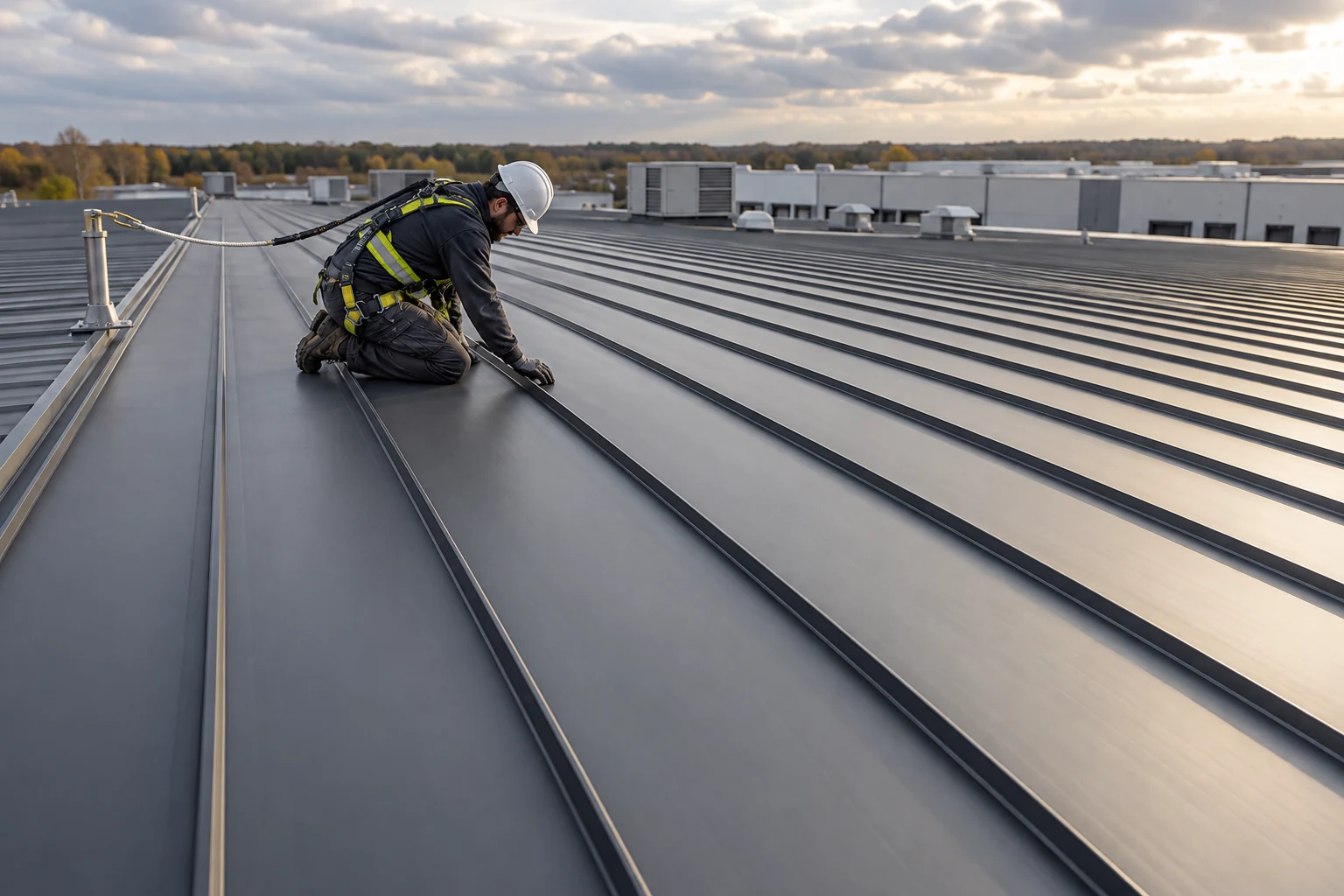
Commercial metal roofing uses shaped panels with connections and flashing designed to shed water. Standing-seam and exposed-fastener systems have different details and requirements. The roof’s slope, support, and selected panel system must work together.
We offer metal roofing services for Flagstaff commercial properties. A leaking metal roof does not automatically need full replacement. We inspect the panels and connections to determine whether targeted repairs can address the problem or whether deterioration calls for broader work.
Loose connections, worn seals, and damaged overlaps can need repair even where the main panels remain usable.
Pipes, roof-mounted equipment, walls, and edges need details suited to the panel system.
The inspection should distinguish surface wear from weakened metal and consider how the panels expand and contract.
Extensive corrosion, badly damaged panels, or problems with the supporting roof can make continued patching a poor choice. A replacement proposal should explain what must be removed, what support repairs are needed, and how the new system will be attached.
A metal retrofit is a separate option that also requires review. The existing roof’s condition and the building’s support cannot be assumed suitable. Any change in materials or roof configuration needs a properly specified system.
Review leakage, corrosion, fasteners, flashing, drainage, and available roof records.
Explain which components can remain and what must be replaced.
Coordinate material handling, equipment, weather protection, and the details that allow the roof to move as designed.
Check the agreed work and explain future inspections and maintenance.
A metal roof estimate should describe the panels, fasteners or clips, flashing and any repairs to the supporting surface. Color and finish are choices within that project. We first establish which panel system fits the building and how its connections will be completed, then discuss the available finish options for that system.
If the building also has a low-slope membrane section, evaluate that area separately. Our commercial roofing services cover membrane and metal systems without treating them as interchangeable.
Tell us about deliveries, entrances, adjacent parking, and rooftop equipment. Repairs and replacement can require different lifting and storage arrangements. Where the building stays occupied, the agreed plan should explain temporary restrictions and how unfinished work will be protected.
A metal roof concern may involve a damaged panel, a failed connection, or flashing around an opening. We inspect the affected details before deciding whether a limited repair is practical. The proposal should explain which components will remain and how repaired areas connect to them.
For replacement, the panel system must suit the roof’s shape, slope, support, and attachment requirements. Different systems accommodate connections and movement differently. A panel profile selected for appearance alone may not answer the building’s roofing needs.
Keep the panel and accessory information after the work. If another contractor later adds equipment or makes an opening, those details help avoid an incompatible alteration. New work should respect the requirements of the installed system.
Yes, when the defect is repairable and the surrounding roof remains suitable. Fasteners, joints, and flashing may need attention without replacing every panel.
Not always. Surface corrosion and metal that has weakened or rusted through are different conditions. The extent and location of deterioration determine the recommendation.
The appropriate system depends on the building, slope, support, and intended use. Compare the specified systems and maintenance needs rather than assuming one label fits every project.
A retrofit may be possible, but it requires assessment of the existing assembly and the proposed support and attachment. Suitability cannot be established from roof area alone.
Only if the design addresses it. The panel system, roof geometry, outlets, and related details must be considered together.
Ask which materials and work are covered, the exclusions, maintenance requirements, and the party responsible for claims. No warranty term should be assumed from the roof material alone.
Bring any panel specifications or earlier repair documents to the assessment. They can help identify the system and previous work, while the inspection establishes the current condition and the repairs or replacement needed.
Call (928) 430-5703 to discuss your building and arrange the next step.