Membrane And Attachment
The membrane type, thickness, and attachment method need to suit the building and the selected system.
Commercial Roofing • Northern Arizona
TPO roofing installation, repairs, and replacement for commercial buildings, with insulation, drainage, and roof details included in the plan.
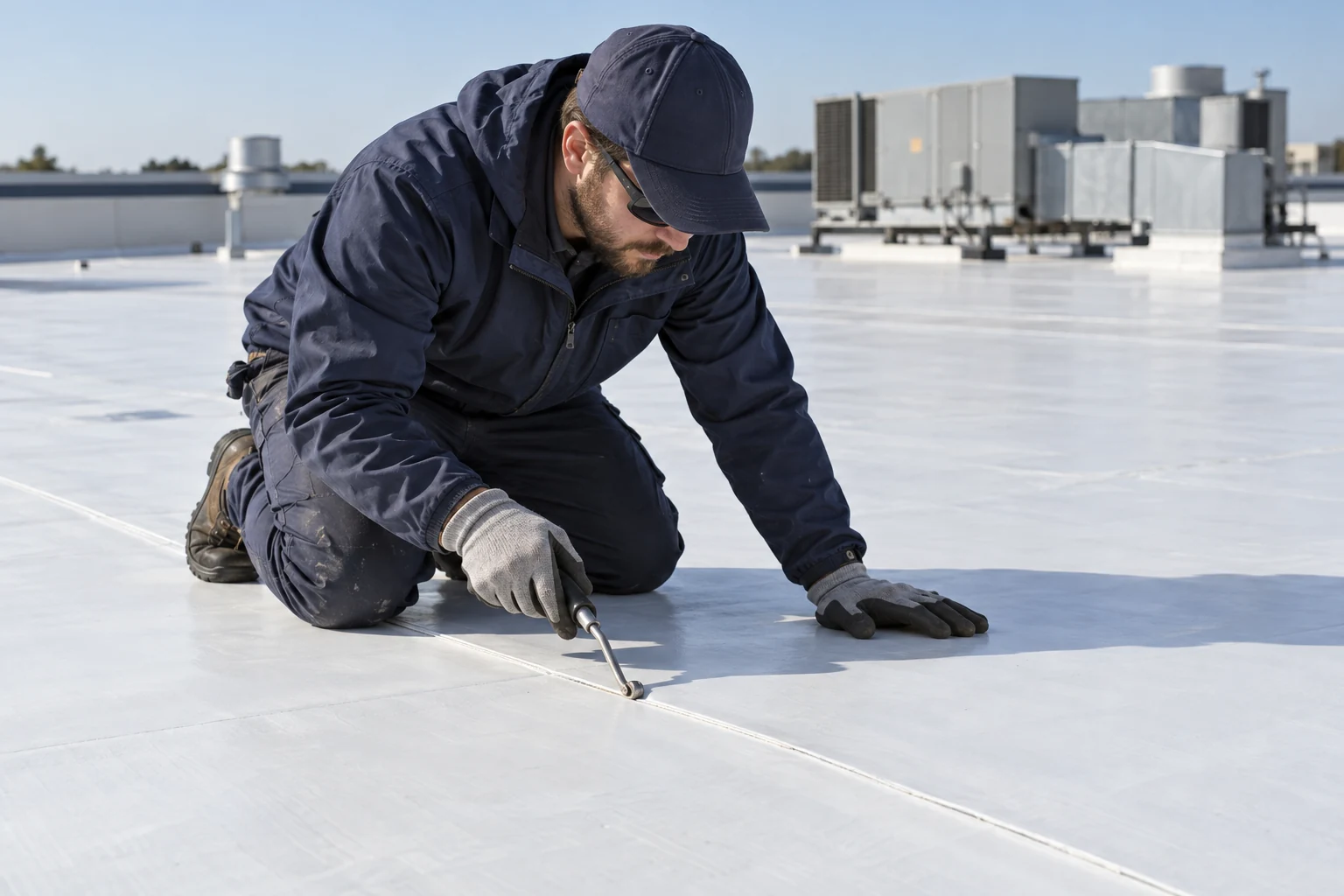
TPO is a flexible sheet membrane used on low-slope commercial roofs. Its seams are joined with hot-air welding. The finished roof also includes insulation, attachment and flashing around equipment, pipes, walls and edges. We consider those parts together when planning installation, repairs or replacement at your building.
We offer TPO roofing for Flagstaff commercial properties. Whether you need work on an existing roof or are planning a replacement, we begin by checking the building and the layers already in place. That helps determine what can stay and what must be repaired or removed.
A puncture or a damaged section of flashing may be repairable when the surrounding membrane remains in good enough condition. Repeated leaks, extensive damage, or moisture below the sheet may require a larger investigation and a different recommendation.
Replacement should come with an explanation of the problem it solves. It also provides an opportunity to review insulation and drainage, but those improvements must be included in the proposal. New membrane alone does not change the roof’s slope or replace wet insulation.
The membrane type, thickness, and attachment method need to suit the building and the selected system.
The layers beneath the sheet must be suitable. Identify any removal, deck repairs, insulation, or cover board included.
Drains, walls, roof edges, and equipment bases require compatible flashing and fastening details.
Review the current roof, visible defects, leak history, and any areas that need further investigation.
Specify the membrane, underlying layers, attachment, drainage work, and flashing.
Coordinate access and weather protection, then install to the chosen system’s requirements.
Check seams and details and review maintenance needs and any written coverage offered.
Cold or changing weather can affect material handling and installation. Adhesives, primers, and other components each have their own requirements. We consider conditions at the roof and the time needed to leave the work protected at the end of each day.
A light-colored roof can reduce absorbed sunlight, but roof color is not the whole energy decision. Insulation, building use, and heating demand also matter. For another low-slope option, see our EPDM roofing service.
If you are considering insulation or other energy-related improvements with the roof, mention them before the estimate is prepared. We can identify which roofing work is included and what needs separate review. This helps keep an optional improvement distinct from the repair or replacement needed to address the roof’s present condition.
Tell us whether the project is a repair, replacement, or new roof. Include the property address, approximate area, and any known leak locations. You can start the conversation without knowing the membrane thickness or attachment method; those details belong in the assessment.
The main TPO sheets are only part of the completed roof. Pipes, equipment supports, corners, edges, and drains need compatible details that connect to the membrane. We review those locations because an otherwise sound roof can still leak where an opening or transition is poorly addressed.
Before approving the project, ask which accessories and attachment method are proposed. The estimate should identify insulation and any damaged material beneath the membrane. It should also explain how the building will be protected while old roofing is removed or new details are completed.
After installation, keep the system documents and identify who handles future roof work. If equipment is added later, its new openings and connections need to suit the roofing already in place.
No. The building’s roof geometry, support, existing layers, drainage, and intended use need review. A complete system must be selected for the actual conditions.
Often a localized defect can be repaired if the surrounding membrane and underlying roof are suitable. The surface must support the selected repair method, and any moisture concerns need investigation.
A recover may be possible after reviewing the existing condition, moisture, attachment, roof layers, and applicable project requirements. It should not be promised before that review.
Not by itself. Drainage changes, such as work at outlets or changes to slope, need to be designed and included separately.
It depends on the products and conditions. Storage, handling, adhesives, and the installation method must meet the manufacturer’s instructions.
Coverage depends on the selected system, installation, and written terms actually offered. Ask what is covered, what is excluded, and who handles a claim before approving the project.
Call (928) 438-8009 to discuss your building and arrange the next step.