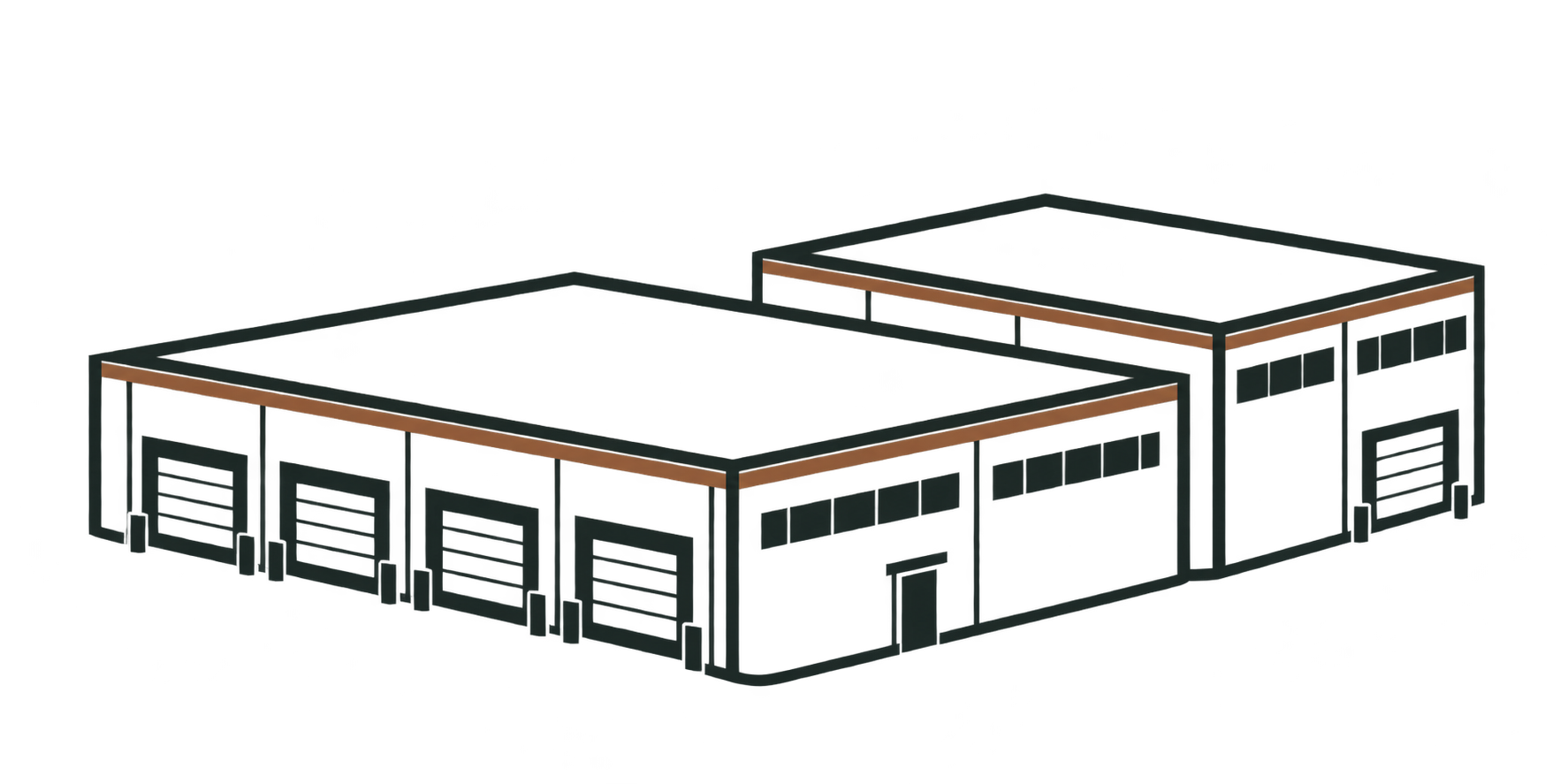
Underlying Roof Condition
Identify which layers will be removed or retained and whether wet insulation or damaged support needs replacement.
Commercial Roofing • Northern Arizona
Commercial EPDM rubber roofing, from repair of existing seams and flashing to a fully specified replacement system.
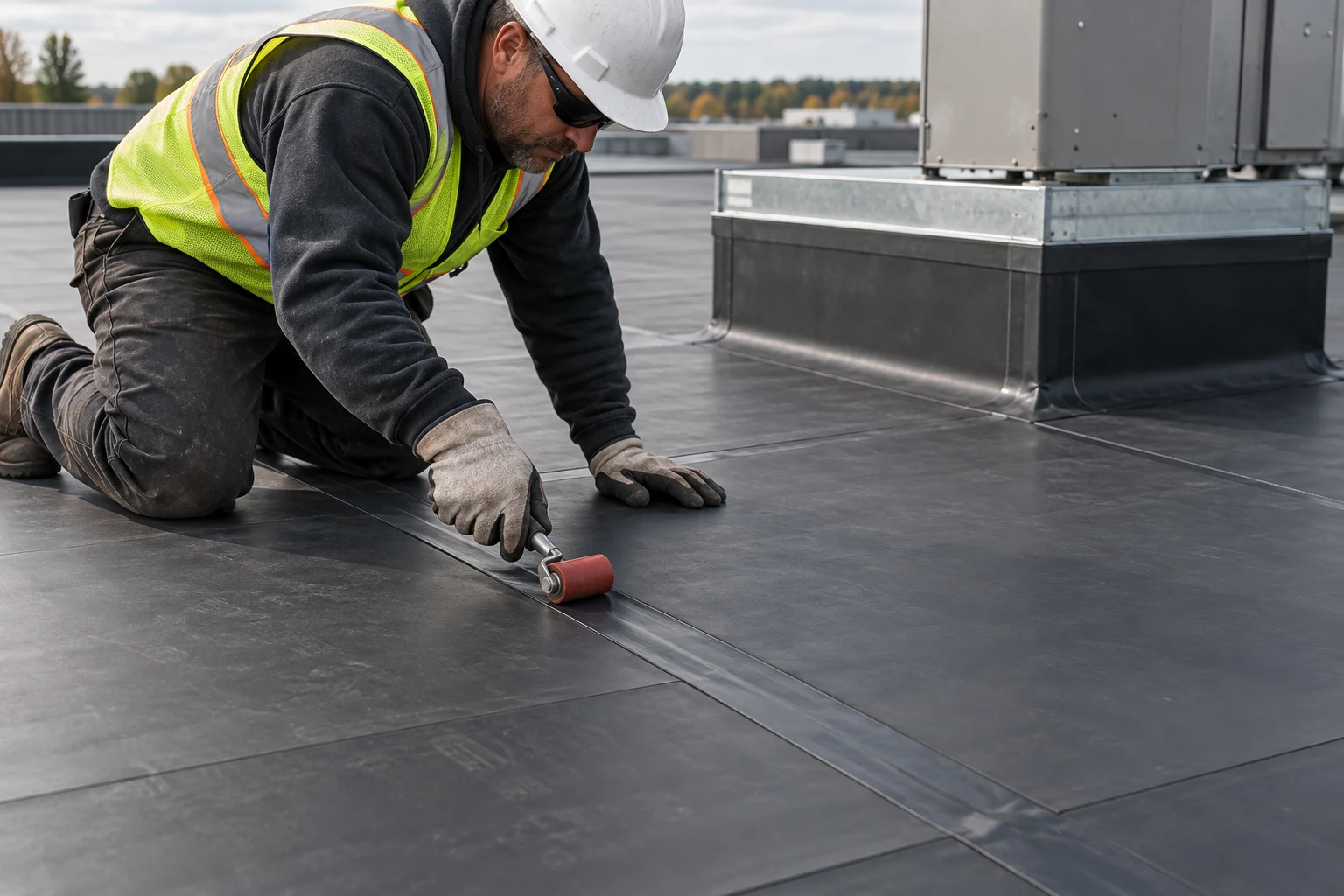
EPDM is a synthetic rubber sheet used on low-slope commercial roofs. Compatible seam products join the sheets, while flashing connects the roofing to walls, drains and equipment. It differs from TPO, which uses heat-welded seams. We identify the existing material before selecting repair products or comparing replacement options for your roof.
We offer EPDM roofing for Flagstaff building owners and facility managers. The work may involve a limited repair or a replacement roof. We review the existing material, the layers beneath it, and the way the roof is used before recommending the work.
An open seam does not necessarily mean every sheet needs replacement. The inspection should check the affected joint, surrounding rubber, nearby flashing, and previous patches. A repair can be practical when there is sound material to connect to and the cause of the problem is understood.
Previous patches affect how an EPDM repair is prepared. We check the existing materials and explain whether any need removal before a compatible repair can be installed. If you have an earlier invoice or product record, share it with us. That history can help identify what was used, although the current condition still needs inspection.
Identify which layers will be removed or retained and whether wet insulation or damaged support needs replacement.
Select the membrane attachment and perimeter details for the system and building.
Specify seams, wall flashing, drains, pipes, and equipment details as part of the work.
Gather the leak history and inspect the membrane and accessible details.
Compare a suitable repair with replacement when the condition warrants it.
Prepare surfaces and install the specified roof, seams, and flashing under suitable conditions.
Review the work, document the system, and discuss access routes for future equipment servicing.
A commercial roof may receive frequent visits from HVAC technicians and other trades. Tell us which equipment needs service and how workers reach it. Walkway protection and clear access routes can be considered as part of the roofing project.
Foot traffic is only one planning factor. Roof drainage, insulation, interior use, and the schedule also matter. Compare TPO roofing if you are still choosing a membrane, and compare the complete proposals rather than only the material names.
Bring installation records, warranty documents, and previous repair invoices if available. If the records are missing, the assessment can begin with what is visible and identify what still needs verification. A quote should state the included areas, preparation, components, and treatment of concealed damage.
An EPDM roof may have field seams, patches, and flashing installed at different times. We look at those existing materials when planning a repair or replacement. A familiar black surface does not tell us which primer, tape, or flashing product was used.
If repair is appropriate, the work description should explain the affected location and the preparation needed for a suitable bond. If replacement is recommended, compare the complete roof system, including attachment, insulation, edges, and drainage details.
Let us know about regular trips to rooftop equipment. Suitable service routes and system-approved protection can be considered as part of the project. Keep maintenance guidance with the roof records so later work does not depend on guessing what was installed.
EPDM is a common type of synthetic rubber roofing. An owner may use rubber as a general description, so records or inspection should confirm the material before repair products are selected.
They may be repairable if the rubber and surrounding roof are suitable. The repair should use the specified preparation, primer, tape, or flashing for the identified system.
EPDM products can have different surface options. Availability and suitability should be reviewed with the complete assembly; color alone should not determine the roof choice.
Wet or damaged insulation needs assessment and appropriate removal or repair. A new sheet does not make unsuitable underlying material acceptable.
We discuss roof access, entrances, air intakes, occupied areas, and any restricted work periods. The specific work determines whether temporary limitations are needed.
A useful price requires roof measurements and a defined repair or installation scope. Removal, insulation, flashing, access, and the existing condition can materially change the total.
Call (928) 430-5703 to discuss your building and arrange the next step.