Owner
- EPDM stays pliable in deep cold, so laps and flashings move with the deck instead of cracking.
- A downtown roof behind parapets can often go down in one or two sheets, with few field seams to maintain.
Rubber Membrane Roofs
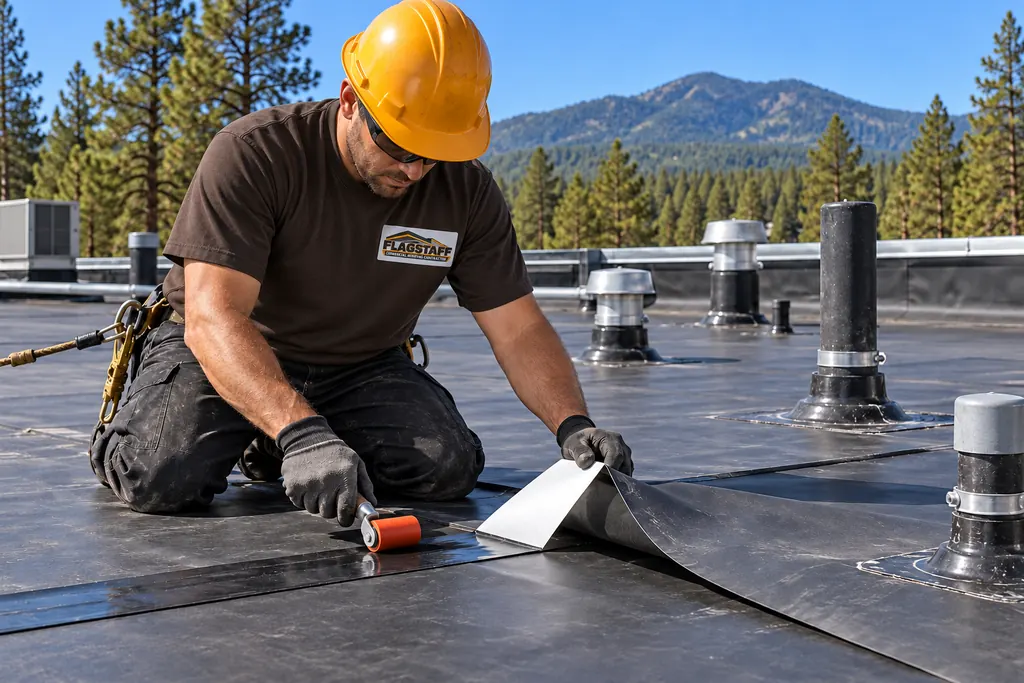
We install, replace, and repair EPDM rubber roofs on Flagstaff buildings. As an EPDM roofing contractor, we work on taped seams, pipe flashings, and aged membrane.
Is It A Fit
EPDM suits roofs that see hard freezes and light foot traffic. These are the lines we use on Flagstaff buildings.
Leak Signs
Aged EPDM tells on itself at seams, pipe flashings, and edges. The inside signs below lead us to each one.
Water appears a day or two after a hard freeze, then stops once the weather warms.
Older seams glued with adhesive open in deep cold. We clean back the lap and rebuild it with seam tape and a cover strip.
A small brown ring sits right under a plumbing vent or pipe through the roof.
The rubber boot around a pipe splits as it ages in the sun. A new pre-molded boot or field flashing seals the penetration.
Occupants hear rumbling or flapping overhead during windy afternoons.
Wind gets under a loose edge and lifts the membrane. New edge metal and a fastened termination hold the perimeter down.
Drops fall from a light fixture or sprinkler head after water travels along the deck.
A small puncture lets water soak the insulation around it. We cut out the wet area, replace the boards, and patch with cover tape.
Frost or damp spots form inside along the top of a parapet wall in winter.
Aged EPDM shrinks and pulls away from the base of walls, bridging the corner. Relieving the tension and reflashing the wall closes the gap.
Your Options
EPDM work runs from rebuilding one lap to replacing the whole roof. The seams and the insulation set which one fits.
| Option | What it involves | When it fits |
|---|---|---|
| Seam and flashing repair | Cleaned laps rebuilt with seam tape, new pipe boots, cover strips | The membrane is still flexible and the insulation is dry |
| Recover with new EPDM | New insulation and EPDM installed over the existing roof | The old roof is dry, the code allows another layer, and the snow load allows the weight |
| Tear-off and replace | Old roof removed to the deck, wet boards replaced, new EPDM | Seams fail across the roof or wet insulation is widespread |
| White EPDM | A light-colored EPDM sheet in place of black | Cooling loads matter more than winter sun gain |
Who Gains
EPDM rubber stays workable through the freezes that crack other materials. Here is who gains on the right building.
Roof Trouble
Call and tell us when the leak shows up and how old the roof is. Cold-weather seam failures on EPDM follow a pattern we can trace.
How The Work Runs
EPDM work happens in dry stretches, with each section taped and flashed before the end of the day.
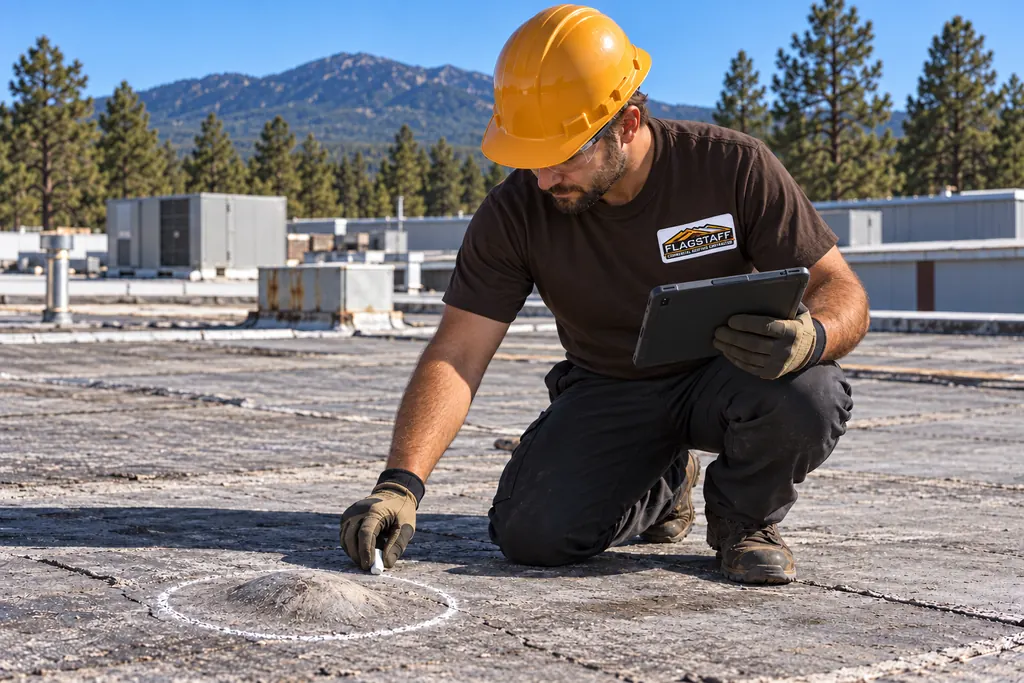
We pull back test laps, check every pipe boot and edge, and run moisture readings. That tells us whether the seams or the whole membrane have reached the end of their life.
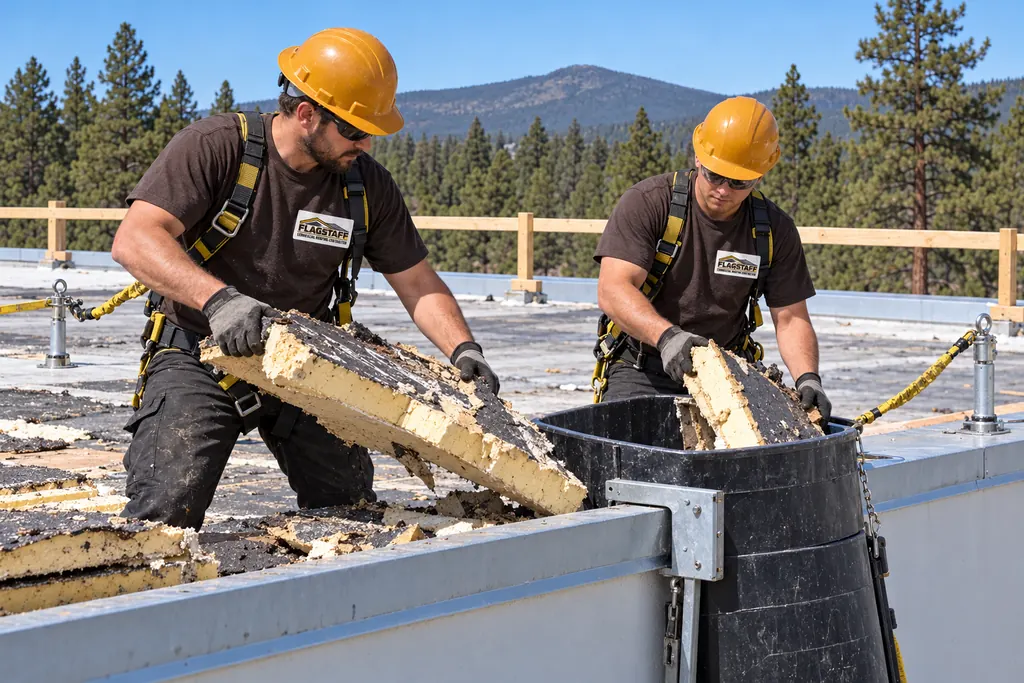
Wet boards come out and the deck gets repaired, or a dry roof is cleaned and prepared for a recover.
Large sheets are adhered or fastened, and laps get primer, seam tape, and a rolled finish. Cover strips go over fastener rows at the edges.
Pre-molded boots, wall flashings, and fastened edge metal finish the roof. Together we walk it and check each seam before closing out.
Roof Systems
Two other systems come up when EPDM is a close call on a Flagstaff roof.
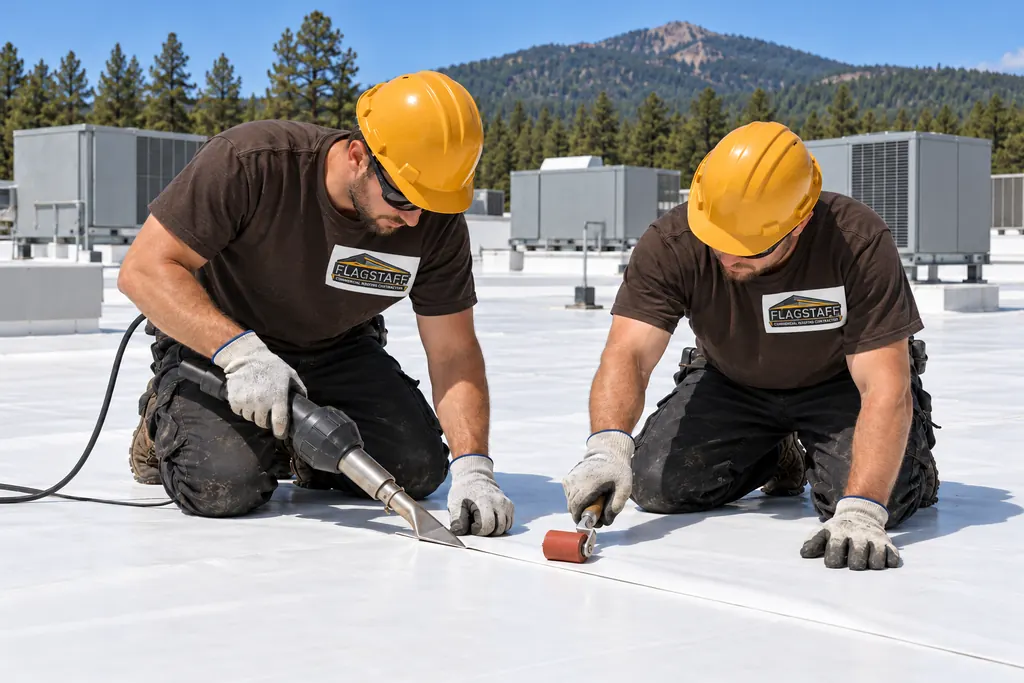
Buildings with heavy rooftop service or big summer cooling loads tend to do better with white TPO and welded laps.
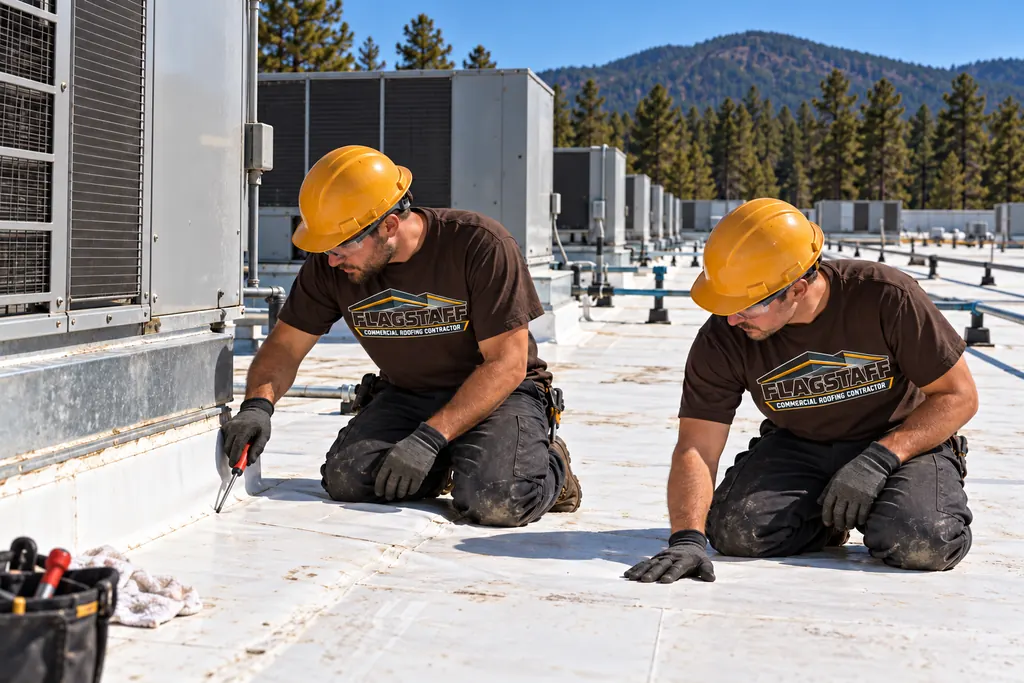
Plants with exhaust, equipment, and daily traffic need reinforced membrane and walkway layouts planned before install.
Common Questions
Answers for owners with an aging rubber roof or a choice to make between EPDM and another system.
When the roof sees many hard freezes and little foot traffic. EPDM stays flexible in deep cold, and black EPDM soaks up winter sun, which can help snow clear sooner on some roofs.
TPO tends to win where summer cooling costs dominate or heat-welded seams are wanted. We compare the existing assembly, deck type, drainage, and how the building is heated before recommending either one.
Old EPDM can often be repaired if the rubber is still flexible. Supple membrane takes new seam tape and patches well.
Brittle, cracked, or badly shrunken membrane, or wet insulation across large areas, points to replacement. A fold test on a sample from the roof edge tells us which one we are dealing with.
Older EPDM seams were glued with liquid adhesive, which weakens with age and lets go when cold stiffens the lap.
Rebuilding those laps with seam tape and cover strips gives a stronger bond than the original adhesive, and it holds through the freeze-thaw cycles here.
Yes, over insulation boards fastened to the deck. The boards give the membrane a flat, firm base and add the insulation that limits melt and refreeze.
The fastening pattern is set heavier at the roof edges and corners, where wind pulls hardest.
Usually no. EPDM resists UV on its own.
When a reflective roof is the goal, a white EPDM sheet is the cleaner route, since coatings on rubber need periodic renewal and add another layer to maintain.
Age and sun. As the rubber loses its oils it shrinks and pulls at walls, curbs, and edges, bridging the inside corners.
Relieving that tension and adding new flashings fixes it while the open field of the membrane still has life left.
With pre-molded pipe boots where they fit, and field-fabricated flashings where the pipe size or shape calls for one.
Each one is primed, taped, and clamped at the top, and we check them all during spring and fall inspections.
Next Step
Tell us how old the roof is and where the leaks show up. We will test the seams and explain whether repair or replacement fits.
Leave a name and number and we will call you about the roof.
Or call now: (928) 430-5703