Owner
- Heat-welded laps fuse into one sheet, and probed welds hold up where snowmelt sits against them for days.
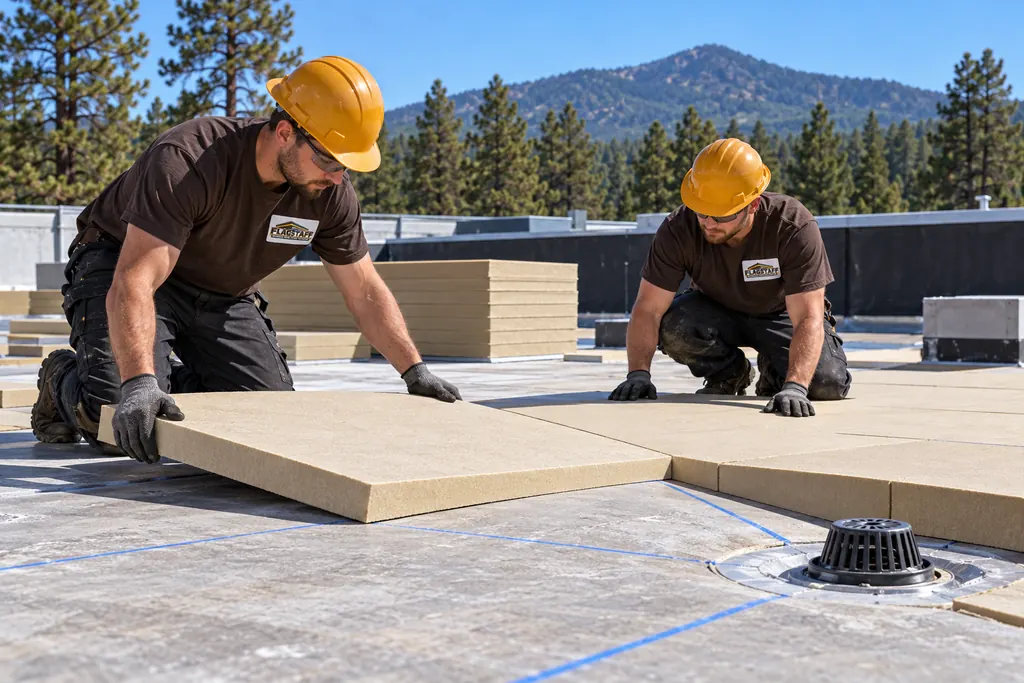
- Tapered boards under the membrane add slope to the drains and insulation that cuts heat loss at the edges.

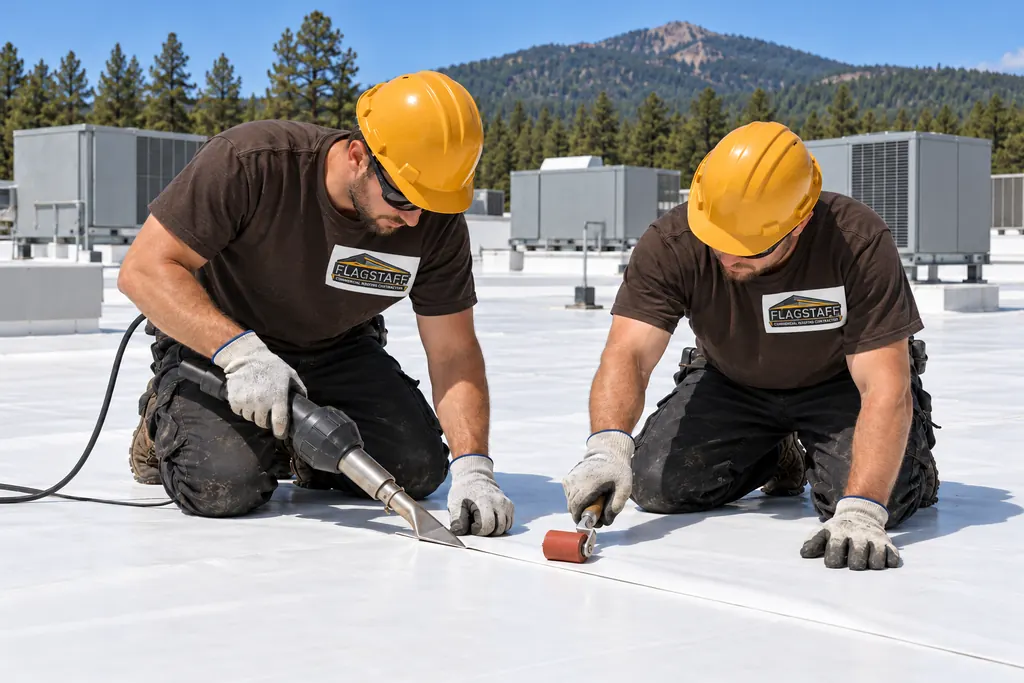
Heat-Welded Membrane
We install, replace, and repair TPO roofs on Flagstaff offices, retail strips, and warehouses. As your TPO roofing contractor, we probe every heat-welded lap before a section closes.
Is It A Fit
TPO works best on low-slope roofs that can be made to drain. Here is how we sort a Flagstaff roof before recommending it.
Leak Signs
TPO problems in Flagstaff show up first at welds, curbs, and drains. Each inside sign below points to one of them.
Water shows up near an outside corner of the building after snowmelt rather than during rain.
Corners and T-joints are the hardest welds to make. A probe finds the gap, and a new cover patch gets welded over it.
A ring of stained tiles sits right under a packaged unit or exhaust fan.
Membrane flashing shrinks and pulls at the top of the curb. We reflash the curb and finish it with a termination bar and counterflashing.
Ceiling tiles bow in the middle of a room, far from any wall or unit.
Foot traffic and snow load crush the insulation, and water sits in the dip. Tapered insulation or new boards restore the slope to the drain.
Top-floor spaces run warmer each summer, and cooling costs climb year over year.
Dirt and UV dull the membrane over time. Cleaning brings back some reflectance, while membrane worn down to the scrim needs replacing.
Cold air and frost show up where the wall meets the roof deck.
Wind and freeze-thaw loosen the membrane where it ends on the wall. New termination bars and coping close the gap.
Your Options
TPO work ranges from a single patch to a full tear-off. The insulation underneath decides which one fits.
| Option | What it involves | When it fits |
|---|---|---|
| Weld repair | New cover patches and rewelded laps at failed spots | Damage is local and the insulation around it is dry |
| Recover over the old roof | New insulation board and TPO over the existing roof | Insulation is dry, the code allows another layer, and the parcel's snow load allows the weight |
| Tear-off and replace | Old roof removed to the deck, wet boards replaced, new tapered insulation and TPO | Wet insulation is widespread or leaks keep returning |
| Heavier membrane | A thicker TPO sheet plus welded walkway pads | Rooftop units get frequent service visits |
Who Gains
TPO earns its place here when the details are built for meltwater. Here is who gains on a low-slope building.
Roof Trouble
Call and tell us which unit and how long the water stays after a thaw. Curbs on TPO roofs are where we start looking.
How The Work Runs
TPO goes down in sections, and each one is welded, probed, and closed before the weather turns.
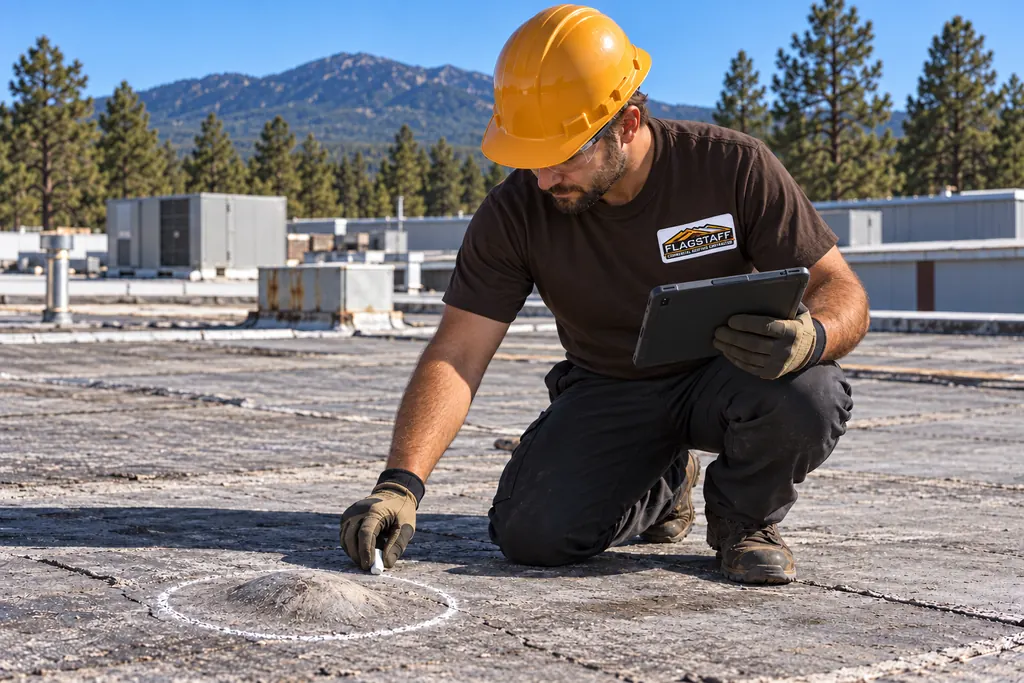
We check every lap, curb, and drain, then run moisture readings across the field. Core cuts confirm what the existing assembly is made of and whether the boards are dry.
Tapered insulation is drawn to carry water to each drain, with crickets behind curbs and along parapets where drifts sit.
Boards and membrane are fastened or adhered, then laps are hot-air welded. Every seam gets probed with a pick before the section closes.
Curbs, walls, pipes, and edges get welded flashings and new edge metal. The final walk with you covers each drain and corner patch.
Roof Systems
Some Flagstaff buildings are better matched to a different system, or combine TPO with one.
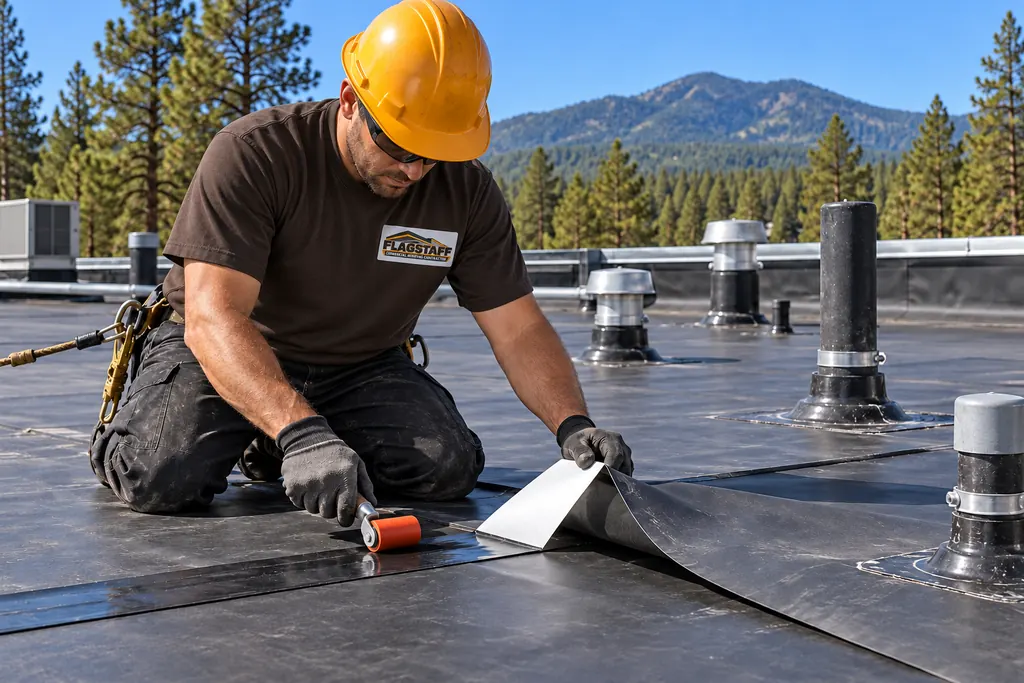
Roofs crowded with pipes and vents, with little foot traffic, often do better with EPDM, which stays flexible through hard freezes.
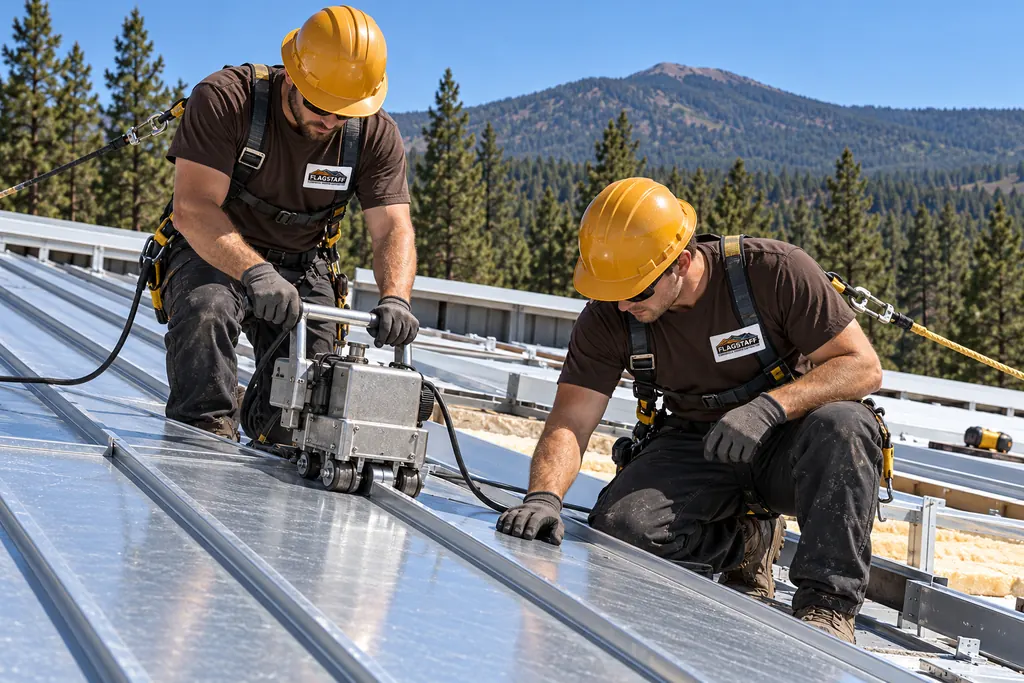
Pitched sections over entries and offices shed snow better under standing-seam metal with snow guards over the walkways.
Common Questions
What Flagstaff owners ask before choosing or repairing a TPO roof.
For many low-slope buildings, yes. TPO is a single-ply membrane with heat-welded seams, and seams that are welded and probed correctly hold up against standing meltwater.
At this elevation the details count most: welds at laps, corners, and penetrations; insulation thick enough to limit melt and refreeze at the edges; and drains placed for where snow drifts. White TPO also helps buildings with big summer cooling loads.
Every lap is probed after welding. A blunt pick drawn along the seam edge catches any gap or cold weld, and that spot is rewelded right away.
On larger roofs, test welds at the start of each day confirm the welder settings for that day's temperature.
Thicker sheets resist punctures and foot traffic better. Roofs with frequent rooftop service or hail exposure get a heavier membrane, while a simple roof with little traffic can use a standard thickness.
We match the thickness to the traffic and damage we see during the inspection.
Welding works in cool weather, but adhesives and some sealants need warmer, dry conditions. Full TPO replacements here run from late spring through early fall.
Through the winter, TPO work is held to repairs and temporary dry-ins.
Wrinkles usually mean the membrane is pulling or the boards below have moved. Shrinkage at the perimeter, loose fasteners, or wet insulation shifting under the sheet are the usual causes.
Each one gets checked before deciding between a repair and replacing that section.
If technicians service rooftop units, yes. Walkway pads welded along the routes to each unit protect the membrane from boots, ladders, and dropped tools.
Those three cause many of the punctures we repair on TPO roofs.
Roof size, how much insulation is wet, tear-off versus recover, membrane thickness, and the number of curbs and penetrations.
Tapered insulation and drain changes add cost up front, and they end ponding for the life of the roof.
Next Step
Tell us the roof size and where it leaks. We will probe the welds, check the drains, and explain the TPO options for the building.
Leave a name and number and we will call you about the roof.
Or call now: (928) 430-5703