Williams hotels and motels have guests under the roof every night of the year. As a Williams AZ commercial roofing contractor, we repair, replace, and install their TPO and metal roofs and plan the work around the rooms below.
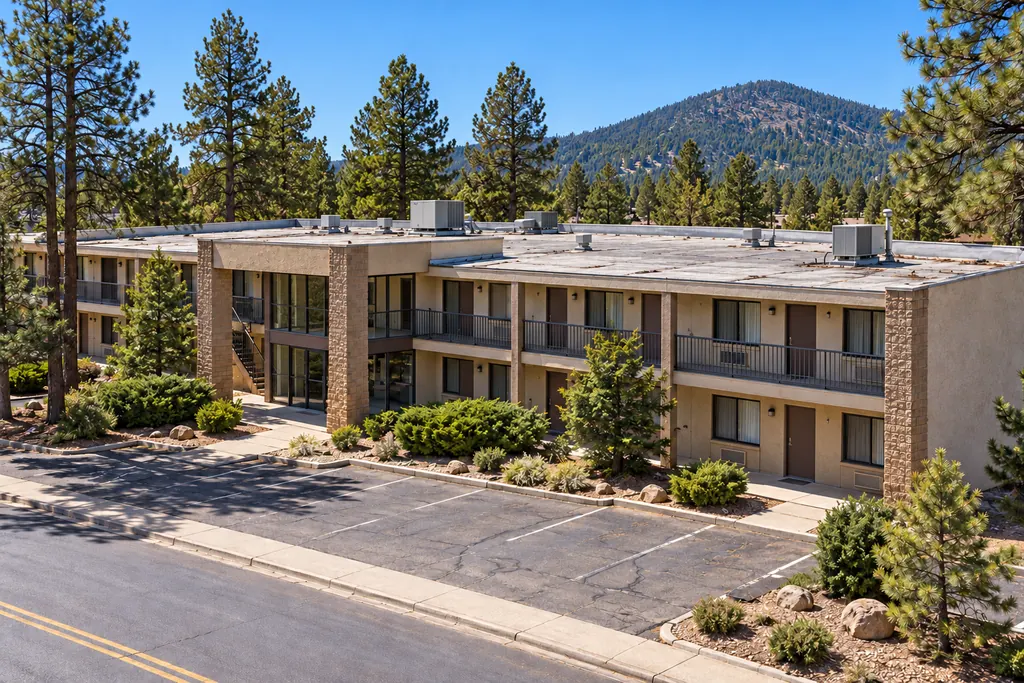
Williams sits at the west end of the I-40 stretch we cover, past Bellemont and Parks. Many of its commercial roofs top hotels and motels, and most of those mix flat sections over guest wings with pitched sections over lobbies, porches, and entries.
Guests sleep below year-round, so a leak means a room off the market and loud work means complaints at the front desk. We plan each job around occupancy, starting where flat and pitched sections meet.
Leaks where a pitched roof drains onto a flat one
Rooftop unit curbs above guest rooms
Snow sliding off metal over entries and walkways
City of Williams permits with a roof plan
Leak Signs
What Guests Notice And What Causes It
Here is how common Williams lodging complaints match what we find overhead.
Inside The BuildingOn The Roof
Inside
Wet Carpet In A Corner Room
Housekeeping finds damp carpet in a top-floor corner room after snowmelt or a summer storm.
On the roof
Flat-To-Pitched Transition
Water and ice collect where a pitched section drains onto the flat roof. We reflash the transition and add a cricket to move water off the joint.
Inside
Noise From The Unit Above
Guests hear rattling or dripping from a rooftop unit over their room late at night.
On the roof
Shifted Curb Flashing
A curb that has moved opens its flashing and lets the unit vibrate. We reset and reflash the curb, then pad the service path around it.
Inside
Ring On A Hallway Ceiling
Water spreads in a ring across a hallway ceiling, far from any exterior wall or window.
On the roof
Open TPO Seams
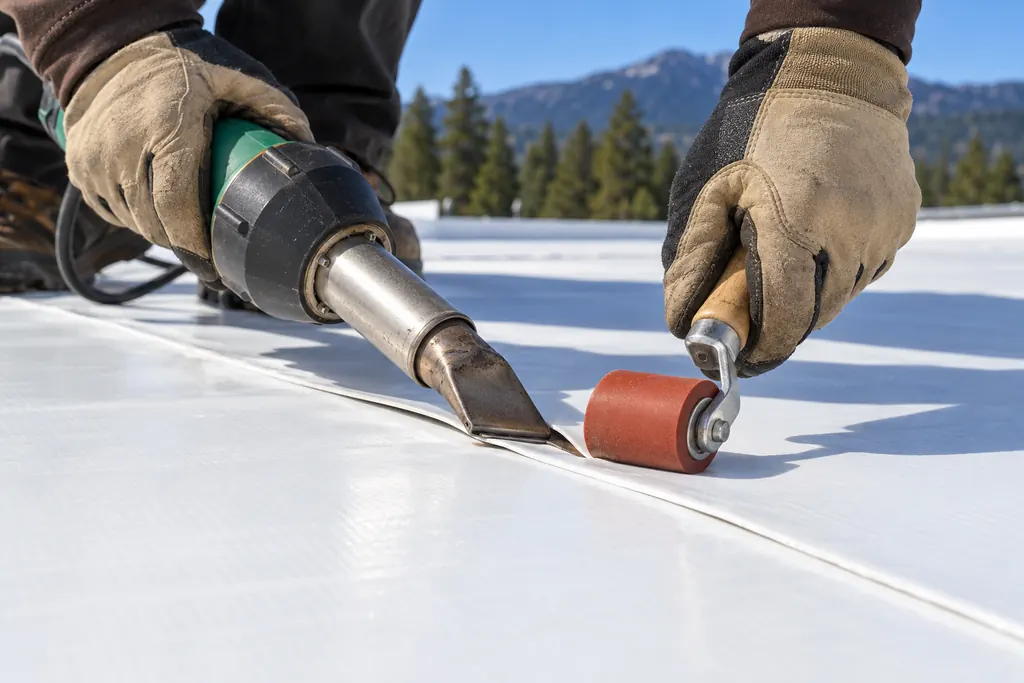
Freeze-thaw cycles and foot traffic pull at weak welds on the membrane. We probe every lap and reweld or patch the ones that open.
Inside
Ice On The Entry Walk
Ice or packed snow drops onto the walkway below the lobby roof where guests carry luggage.
On the roof
Snow Sliding Off Metal
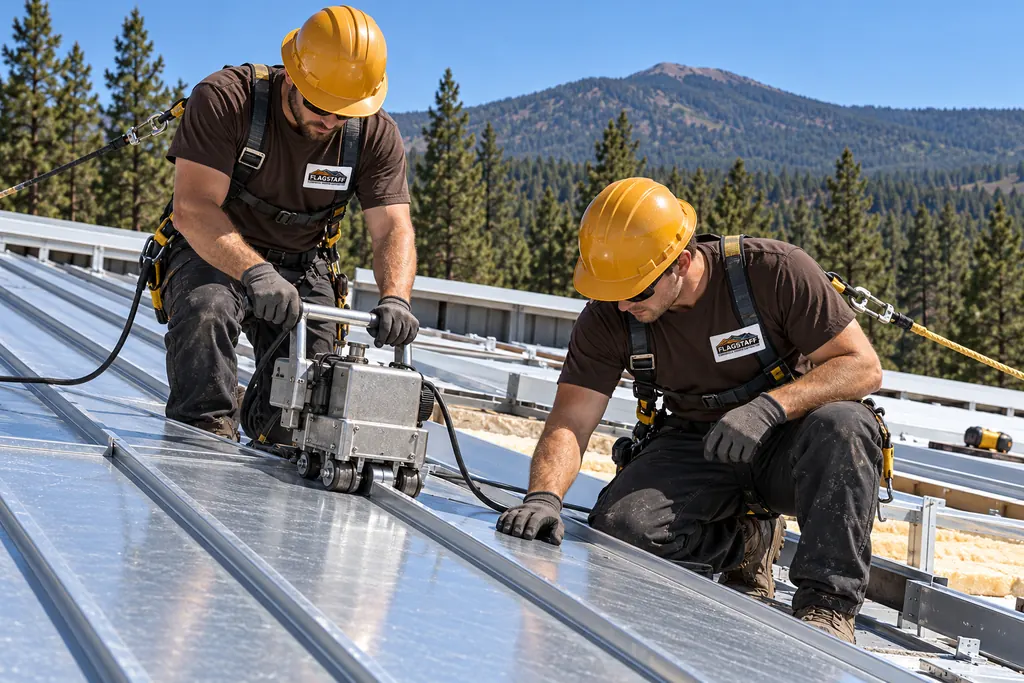
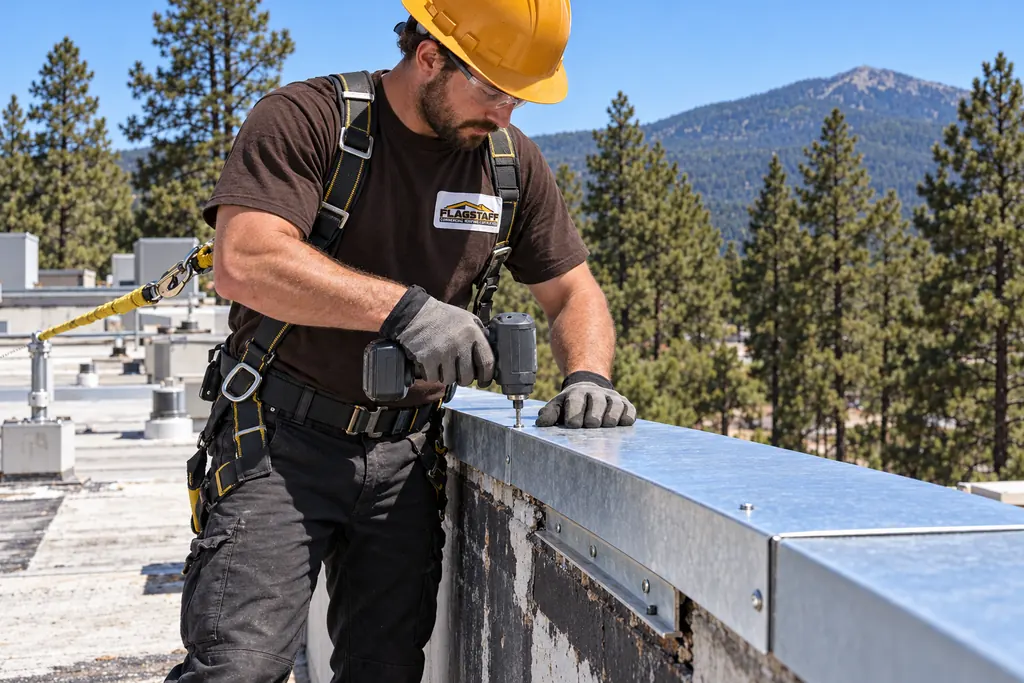
Standing-seam panels over entries shed snow fast. Snow guards and secure fastening at the panel ends hold it back from doors and walkways.
Inside
Cold Rooms On The Top Floor
Top-floor rooms feel cold near the ceiling, and room heaters run hard all winter long.
On the roof
Thin Insulation And Ice Dams
Heat lost through the deck melts snow that refreezes at the eave. Added insulation and air sealing at roof penetrations cut that melt.
Who Gains
Gains From A New Roof In Williams
On a Williams lodging building, a new roof shows up in fewer closed rooms, calmer maintenance days, and comfortable guests through every season.
Owner
Welded TPO laps and reflashed curbs over guest wings end the repeat leaks that take rooms out of service after storms.
Crickets at the joint between pitched and flat sections push water off the transition before it pools and freezes against the flashing.
Facility Manager
Phasing the work one roof section at a time keeps each part watertight by day's end while the rooms below stay open.
Walkway pads from the hatch to each rooftop unit give service visits a set route that spares the membrane above guest rooms.
Noisy tear-off scheduled early or on slow days, with materials staged away from entrances, keeps the front desk free of roof complaints.
Guests And Staff
Snow guards and fastened panel ends on standing-seam metal hold sliding snow above the porches and walkways guests use daily.
Top-floor rooms stay cooler in summer because a white TPO membrane reflects strong sun off the flat sections above them.
Roof Systems
Roof Systems We Install In Williams
Most lodging buildings here use two systems on one roof. Each section gets the system that fits its slope and what sits below it.
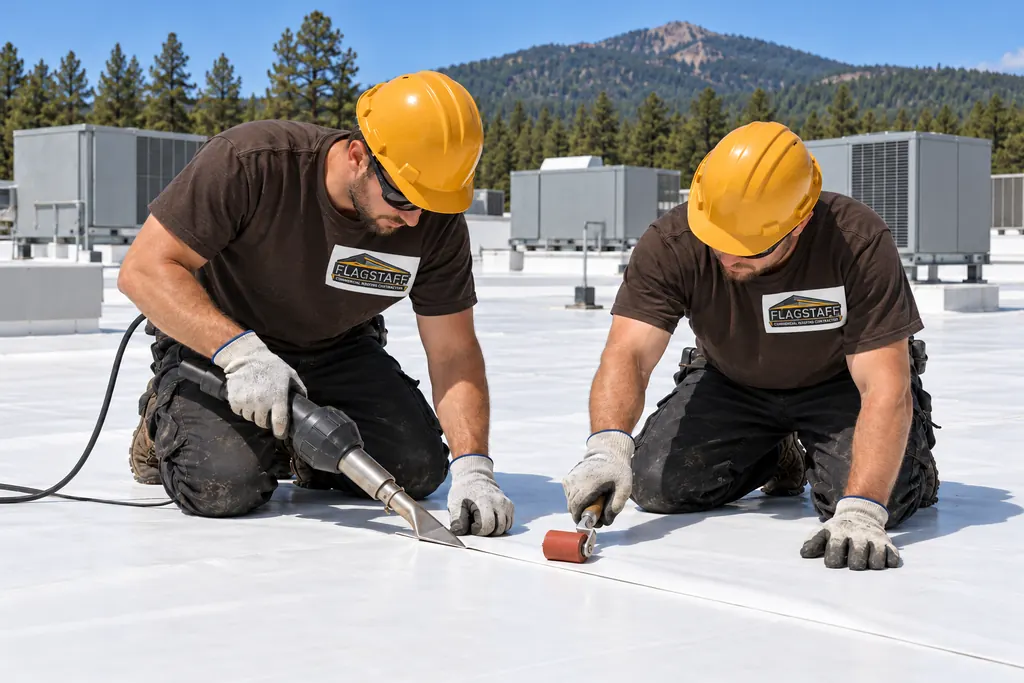
Flat sections over guest wings, with heat-welded seams that handle rooftop units and service traffic. Each lap is probed before that section is closed.
A hotel roof gets replaced in small pieces around the room schedule. Here is the order we work in for Williams lodging.
1
Inspect Your Roof
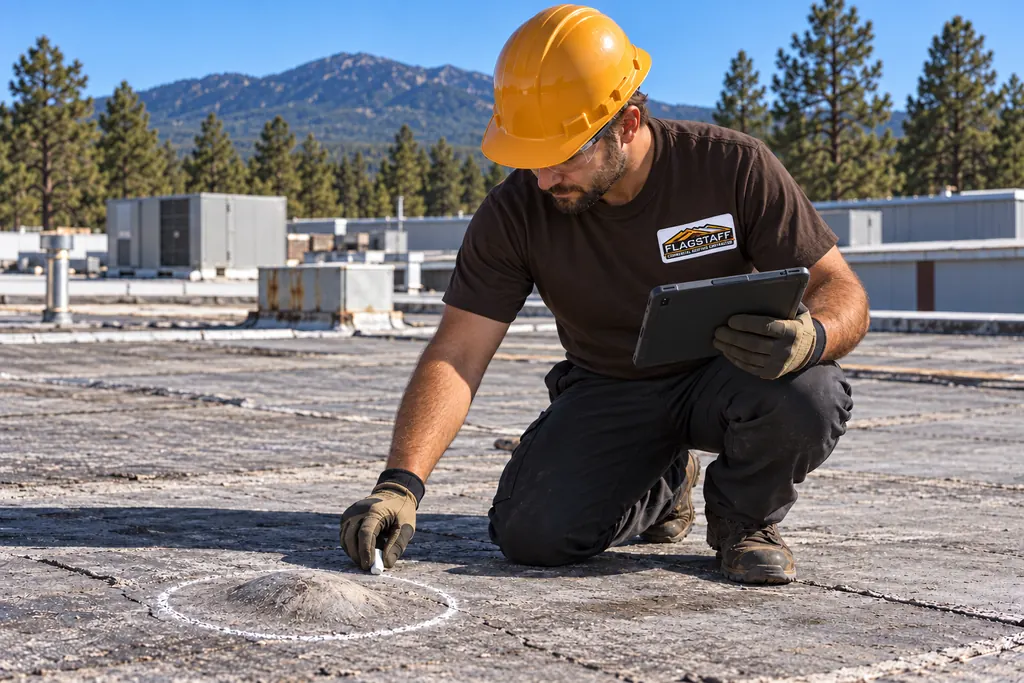
Room by room, we match leak reports to the roof above, then walk every flat and pitched section, checking seams, curbs, transitions, and edge metal. Findings go on a marked roof plan.
2
File The City Permit
Williams is an incorporated city, so its Building Department issues the permit, and the application includes a roof plan. We confirm current requirements with the City before roof work starts.
3
Work Around Booked Rooms
Noisy tear-off goes over rooms you have held back or onto slow nights. Cranes stay clear of entries and fire lanes, and HVAC intakes are covered against fumes and dust.
4
Close Each Section Daily
Every open roof area is watertight by evening. A final walk with your manager covers seams, curbs, snow guards, and the coping on each parapet.
Answers to what Williams lodging owners and managers ask before roof work starts over their rooms.
Does historic review affect roof work in Williams or downtown Flagstaff?
It can in Williams. The City of Williams lists a historic preservation approval among its building permit forms, so roof changes on older downtown buildings can need that step before a permit is issued.
We ask the City whether your building falls under that review and add the time to the schedule.
Who issues roofing permits in Williams?
The City of Williams Building Department, since Williams is an incorporated city. Permit applications include a roof plan showing the work.
City rules get updated from time to time, so we confirm the current forms for your address before work starts.
Can a hotel stay open while the roof is replaced?
Yes. One section is open at a time and sealed by the end of each day.
Loud tear-off goes over rooms you have held back or onto slow nights. Cranes and materials stay away from the lobby, entries, and fire lanes, and air intakes get covered so fumes stay out of guest rooms.
Why does the roof leak where flat and pitched sections meet?
That joint collects water and ice from two directions. Snow sliding off the pitched roof piles on the flat section, melts, and sits against the transition flashing.
Freeze-thaw cycles then open the laps. Reflashing the transition, adding a cricket, and checking the insulation below usually ends the leak.
Is TPO or metal better for a lodging building?
Most lodging buildings use both. TPO fits flat sections over guest wings, with heat-welded seams and a white surface for summer sun, and lasts about 20 to 30 years.
Standing-seam metal fits pitched lobby and entry roofs, shedding snow and resisting wind for about 40 years or more, as long as snow guards keep sliding snow off doors and walkways.
How do we keep snow from sliding onto guests at the entry?
Snow guards on the metal panels above the entry hold snow until it melts in place.
Panel ends need secure fastening so the load does not pull them loose, and eave placement should keep the drip line off walkways. On new metal roofs, we lay out guards and eaves with your entries and parking in mind.
What should a hotel roof inspection check?
Every curb under a rooftop unit, the transitions between flat and pitched sections, seams across the flat roof, and snow guards on the metal.
Inspections in spring and fall, plus after major storms, catch problems before a guest does. Logging each leak by room number shows the pattern over time.
Next Step
Schedule Roof Work With A Williams Commercial Roofing Contractor
Tell us your busiest weeks and which rooms have leaked. We will set the inspection around your guests and front desk.