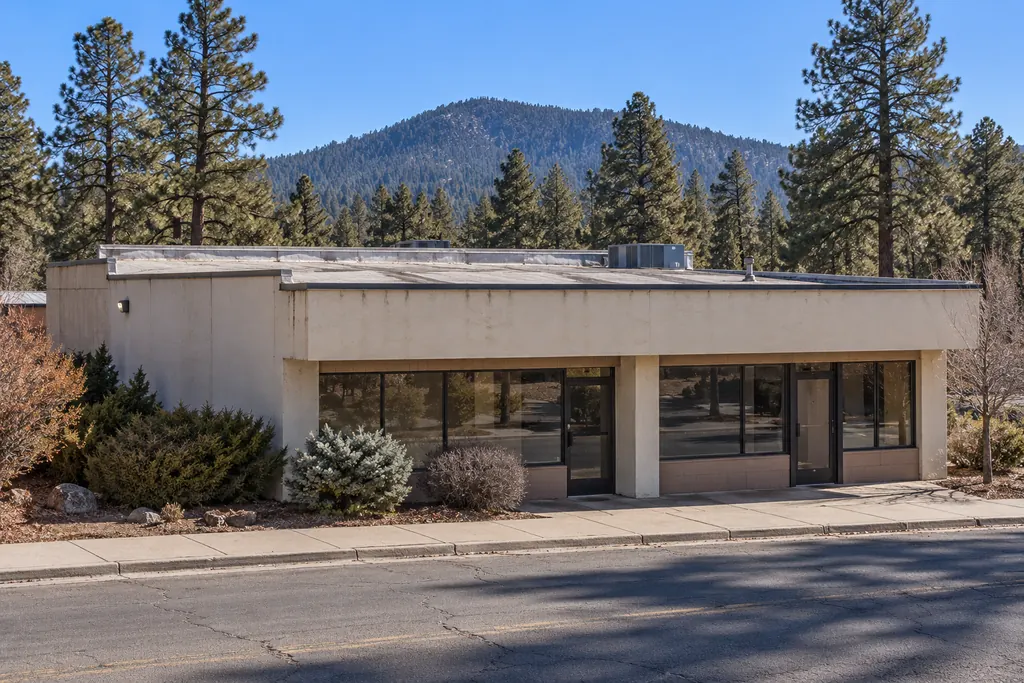
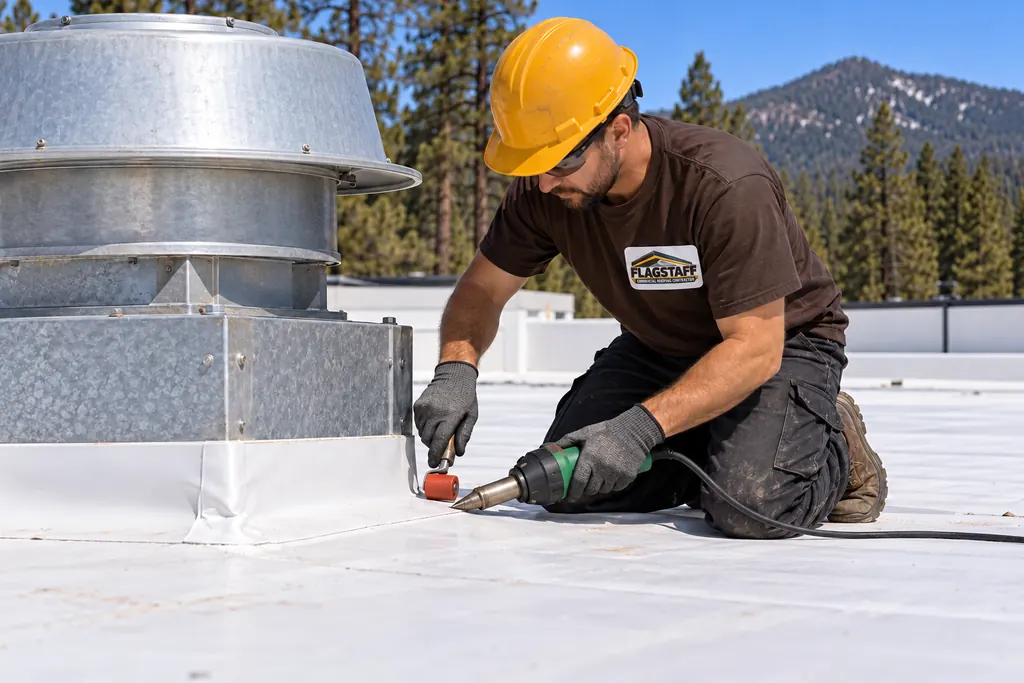
We are a Kachina Village commercial roofing contractor that repairs, replaces, and installs roofs on small commercial buildings off I-17 and stops the ice dams that form along cold eaves each winter.
Kachina Village sits just south of Flagstaff off I-17, among the pines. Commercial buildings here include shops, offices, and service buildings, many with low-slope roofs, some with a pitched section or overhang along the front.
On these roofs, ice builds at the coldest edge. Warm air from the rooms below melts snow, and the meltwater freezes again where the roof runs out past the heated walls.
Ice ridges at overhangs and gutters
Meltwater backed up under laps and flashings
Warm air leaking at penetrations and wall joints
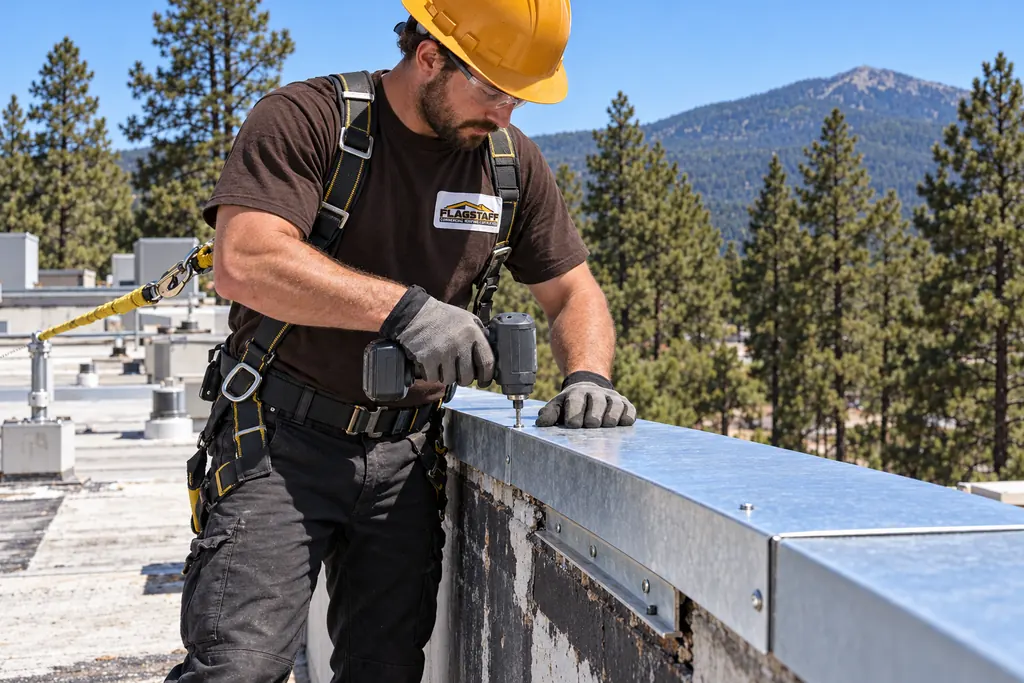
Ice barrier at the eaves of sloped sections
Leak Signs
Winter Drips Traced To The Eave
Ice dam leaks show up inside in odd places and at odd times. Here is what each one points to on the roof.
Inside The BuildingOn The Roof
Inside
Drips On Sunny Afternoons
Water drips near an exterior wall on a clear day, long after the last snowfall ended.
On the roof
Ice Ridge At The Eave
Snow melts over the heated rooms and refreezes at the cold overhang. The ice ridge holds water, which backs up under the laps above it.
Inside
Streaks Below The Ceiling Line
Brown streaks run down drywall just under the ceiling along the front wall of the building.
On the roof
Warm Air At The Wall Joint
Heated air escapes where the wall meets the roof deck and melts the snow above it. We air seal that joint and reflash the edge.
Inside
Icicles Over The Entrance
Long icicles hang from the gutter above the front door, and a glaze of ice coats the walk below.
On the roof
Frozen Gutter And Edge
A gutter packed with ice and pine needles traps meltwater at the edge. We reset the edge metal and gutter so water leaves before it freezes.
Inside
Frost Around A Vent Pipe
Ceiling tiles around a plumbing vent or exhaust duct turn damp, then show frost on cold mornings.
On the roof
Unsealed Penetrations
Gaps around pipes and ducts leak warm, moist air into the roof assembly. Sealing each penetration at the deck and reflashing it at the membrane stops the melt.
Inside
Heating Bills That Climb
Heating costs rise each winter, and snow vanishes from the roof faster than from the parking lot.
On the roof
Thin Or Wet Insulation
Little insulation over the deck lets heat reach the snow. A core sample shows what is there, and added boards keep the roof surface cold.
Who Gains
Gains From A New Roof In Kachina Village
Stopping ice dams at the source improves a Kachina Village building for the person who owns it, the person maintaining it, and the people working under it.
Owner
Added insulation above the deck keeps building heat indoors, so snow on the membrane stays frozen rather than melting and refreezing at the eave.
Laps and flashings stop getting pried open by ice each winter, which cuts the repeat repairs that wear down an older roof.
Facility Manager
Air sealing at pipe penetrations and wall-to-roof joints stops the warm, moist air that feeds ice along the roof edge.
Gutters and outlets sized for meltwater carry it off before it freezes, so nobody needs to chip ice off the membrane.
On pitched sections, an ice-barrier layer under the eave panels seals around each fastener when water backs up behind a dam.
Tenants And Staff
Ceiling tiles along exterior walls stay dry once meltwater stops backing up under the drip edge and into the wall line.
Walkways below the overhang stay free of icicles and refrozen drips when the roof edge sheds water before it can freeze.
Roof Systems
Roof Systems We Install In Kachina Village
Many commercial buildings here pair a low-slope main roof with a pitched front or overhang. These two systems cover both.
Removing the ice treats the symptom. This is the order we follow to stop the heat loss that builds it.
1
Inspect Your Roof
We check the eaves, gutters, and flashings, then look under the deck for warm-air leaks and thin insulation. Ice stays in place rather than being chipped off the membrane.
2
Seal The Air Leaks
Penetrations, duct chases, and the joint where walls meet the roof deck are sealed first, so warm air from the rooms stops reaching the snow.
3
Insulate And Reroof
Added insulation boards go down over the deck, and the new membrane or metal panels follow, with ice barrier at the eaves of sloped sections.
4
Rebuild The Edge
Drip edge, gutters, and outlets are set so meltwater runs off before it freezes. A follow-up visit after the first big snow confirms the eaves stay clear.
Answers to what owners and managers ask about winter leaks and roof work on Kachina Village buildings.
Why do ice dams form on commercial roofs here, and how are they stopped?
Ice dams form when heat leaking through the roof melts snow, and that water freezes again at a colder edge. The ice then pushes water back under laps and flashings.
Lasting fixes are insulation upgrades, air sealing at penetrations and wall-to-roof joints, edge and gutter details that drain meltwater before it freezes, and ice-barrier underlayment at the eaves of sloped sections. Chipping ice off a membrane often does more harm than the dam.
Which office handles commercial roof permits in Kachina Village?
Coconino County Building and Safety handles them, because Kachina Village is unincorporated county land.
The County asks for a pre-construction meeting with building staff before a commercial application is filed. Its parcel viewer shows the district for your address, and since requirements change, we confirm them with the County before work begins.
Is it safe to chip ice off the roof edge?
No, as a rule. Picks, shovels, and hammers cut membranes and bend edge metal, and that damage often costs more to fix than the dam itself.
If water is coming in now, we repair it or set a temporary dry-in, then fix the heat loss and edge details behind the dam.
Do we need a new roof, or can the eaves be repaired?
It depends on the roof's age and how much water has already gotten in. If the field membrane is in good shape and the insulation is dry, we repair the eaves, seal the air leaks, and add insulation where reachable.
Wet insulation, open seams across the field, or repeat leaks at several edges point toward a replacement.
Which roof system works best on a small shop with a pitched front?
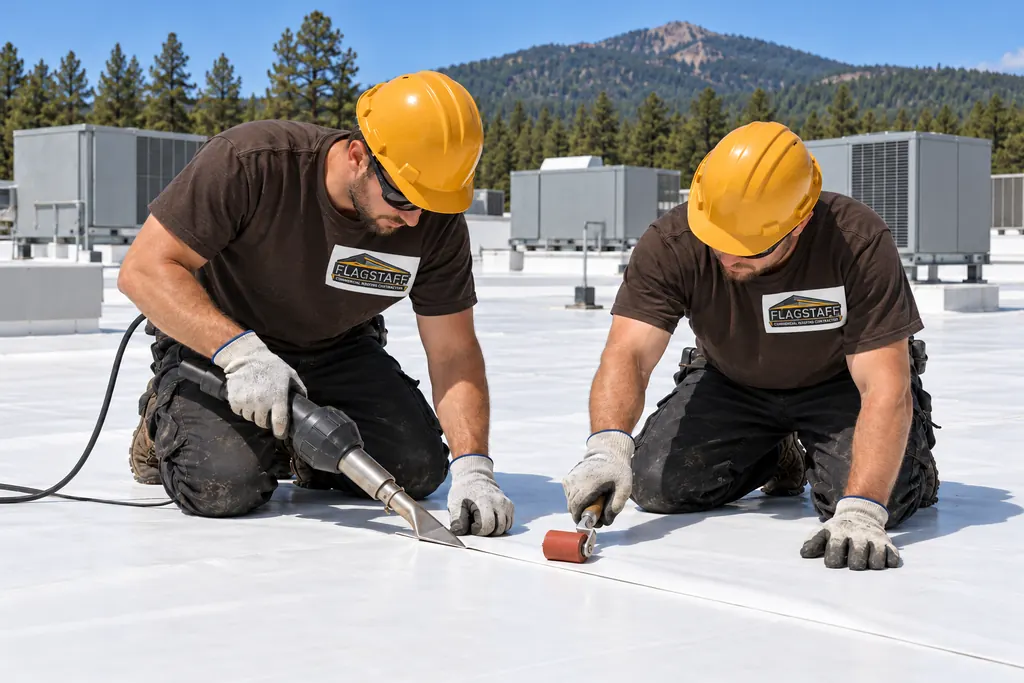
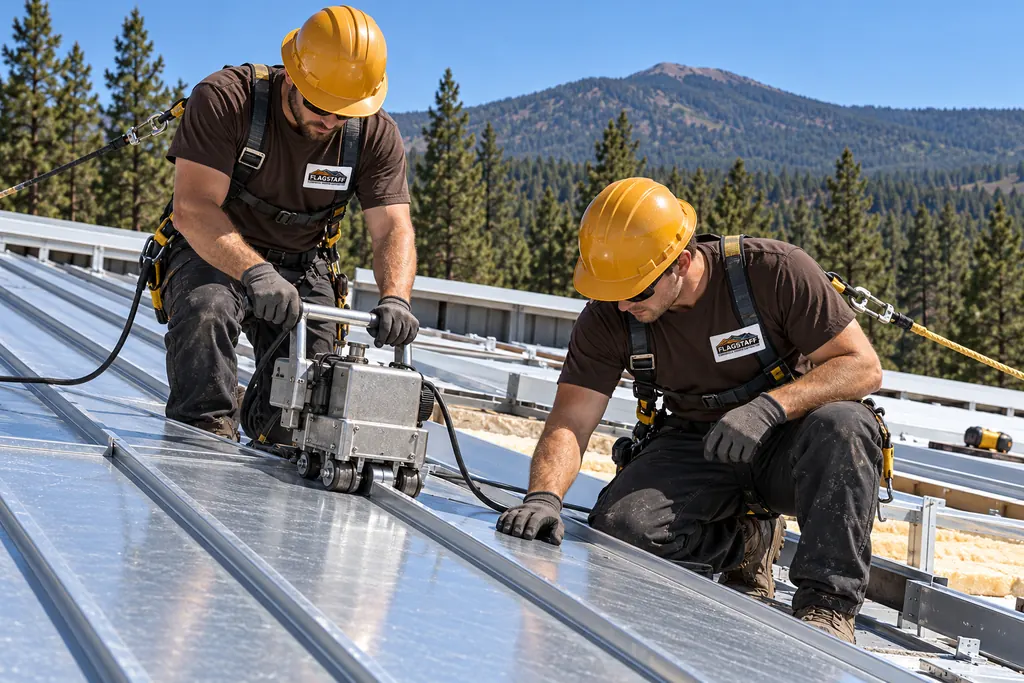
A split system works well: TPO on the low-slope main roof and standing-seam metal on the pitched front or overhang.
Welded TPO seams handle standing meltwater. Metal sheds snow before it can pile into a dam, though sliding snow calls for snow guards above doors and walkways.
How do you keep a storefront running during roof work?
Work moves across the roof one section at a time, and every opened area is closed and dry before the crew leaves for the day.
Loud demolition happens early or on days the shop is closed. Lifts and materials stay clear of the front door and fire lanes, and HVAC intakes get covered against fumes.
When is the best time to fix an ice dam problem for good?
Plan the permanent work for late spring through early fall, when membranes, sealants, and adhesives get the warm, dry weather they need.
The season is short at this elevation, so book ahead. Midwinter leaks get repairs or a temporary dry-in, and the insulation and edge work follows once it warms up.
Next Step
Planning Roof Work With A Kachina Village Commercial Roofing Contractor
Tell us where ice forms each winter and where water shows up inside. We will plan the inspection around those spots.