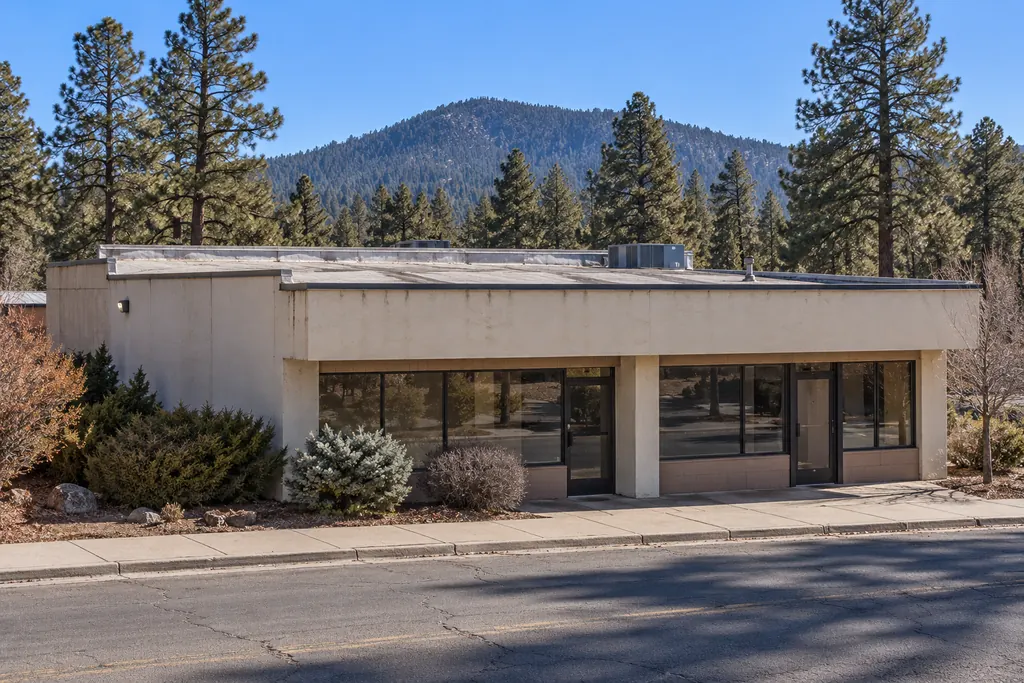
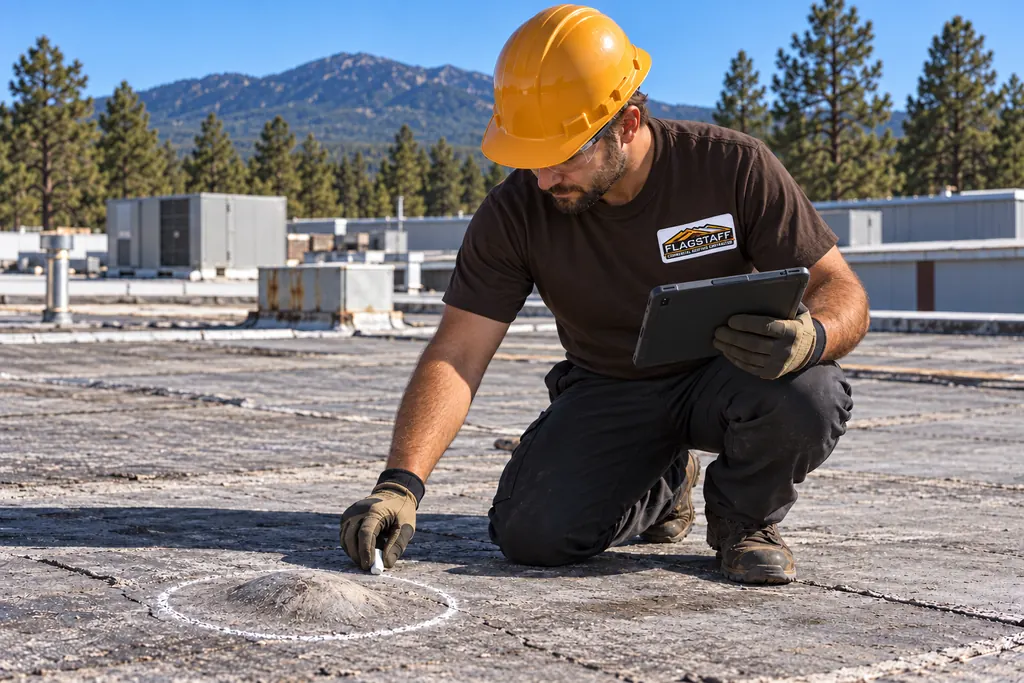
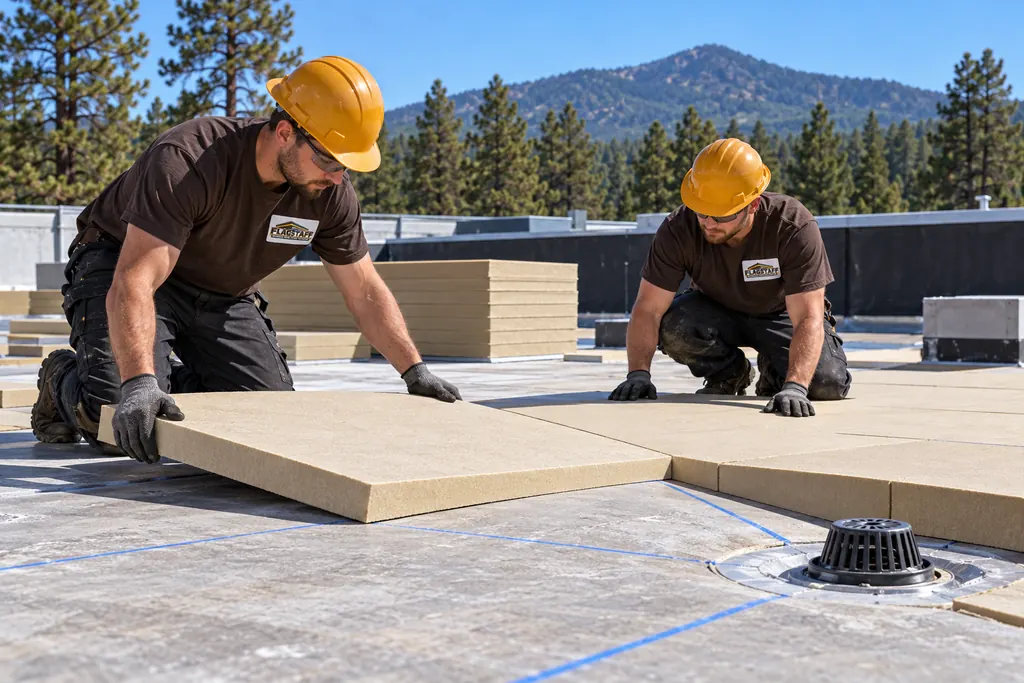
We work as a Mountainaire commercial roofing contractor on buildings beside I-17, replacing, repairing, and installing TPO and EPDM roofs. Before a new layer goes over an old one, we find out how much snow the structure has to carry.
Mountainaire borders Kachina Village just south of Flagstaff, on the I-17 corridor. Owners here often ask whether a worn roof can be covered instead of torn off.
The answer starts with snow. Coconino County asks designers to use a ground snow load set for the exact parcel, and every added layer or heavier system puts more weight on the deck and framing.
Parcel-specific ground snow load from the County study or the ASCE Hazard Tool
Engineered plans where the ground snow load tops 70 psf
Moisture survey of the insulation before any recover
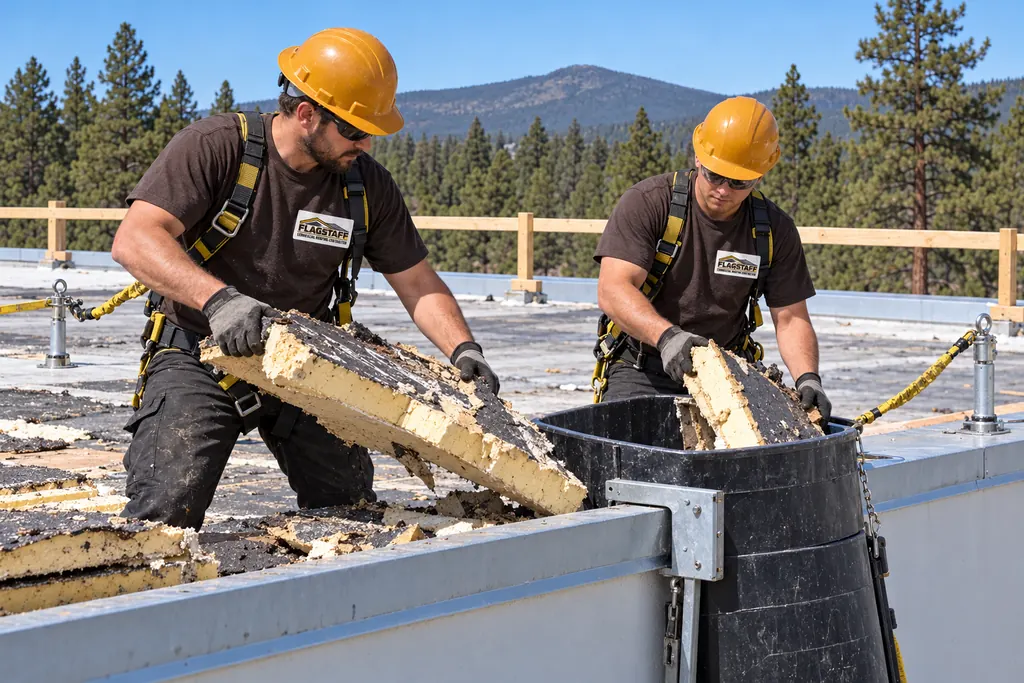
Tear-off to the deck when boards are wet or the load is tight
Leak Signs
Signs The Structure Is Already Working Hard
Before adding weight, we look for signs the roof is near its limit or holding water, inside and above.
Inside The BuildingOn The Roof
Inside
Ceiling Grids That Dip
Suspended ceiling grids sag in the middle of a room after a heavy snowfall, then level out again in spring.
On the roof
Deck Deflection
A deck that bends under snow has little reserve left. We measure the dip, note joist spacing, and flag it for an engineer before any second layer.
Inside
Doors That Bind In Winter
Interior doors stick in their frames during snowy months and swing free once the roof clears.
On the roof
Drift Weight At Walls
Snow drifts pile deepest against parapets and rooftop units. That extra weight lands on a few joists, so we map drift zones on the roof plan.
Inside
Patchy Ceiling Stains
Stains spread across ceiling tiles in scattered patches, well away from any pipe or roof drain.
On the roof
Wet Insulation Under The Membrane
Soaked boards weigh far more than dry ones and insulate poorly. A moisture survey finds them, and wet areas come out before a recover.
Inside
An Old Recover On File
Records in the building file show the roof was already covered over once before.
On the roof
Layers Already Stacked
Code limits how many roofs can stack on one deck. When a recover already exists, the next roof usually means a full tear-off to the deck.
Inside
Water Beside A Column
Water shows up next to an interior column or wall after a long thaw, far from the building edges.
On the roof
Ponding In A Low Bay
Standing water in a sagging bay adds its weight to the snow above. Tapered boards and an engineer's check on the framing come before the next roof.
Who Gains
Gains From A New Roof In Mountainaire
Checking snow load before a new layer goes on protects the structure, the work schedule, and the people inside a Mountainaire building.
Owner
Deck and framing get checked against the parcel's own ground snow load before any new roof layer is added.
Tearing off old layers keeps the dead load low, leaving more of the structure's capacity for winter snow on the roof.
Rusted or deflected deck panels come out during tear-off and get replaced before the new membrane goes down.
Facility Manager
Wet insulation leaves with the old roof, so new dry boards end the hidden leaks that kept reappearing after each spring thaw.
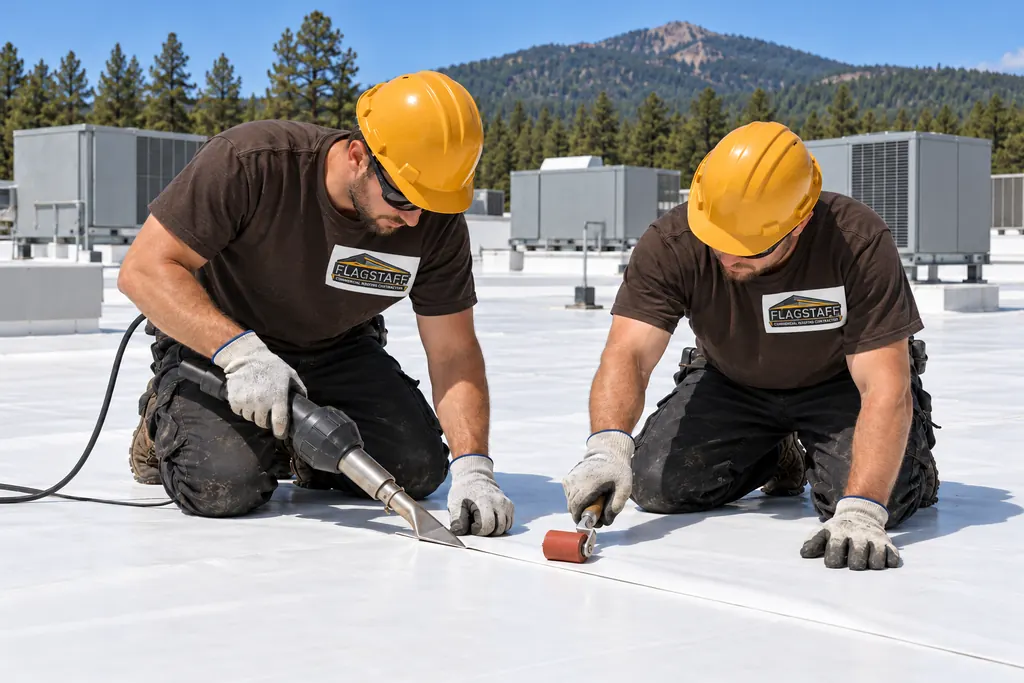
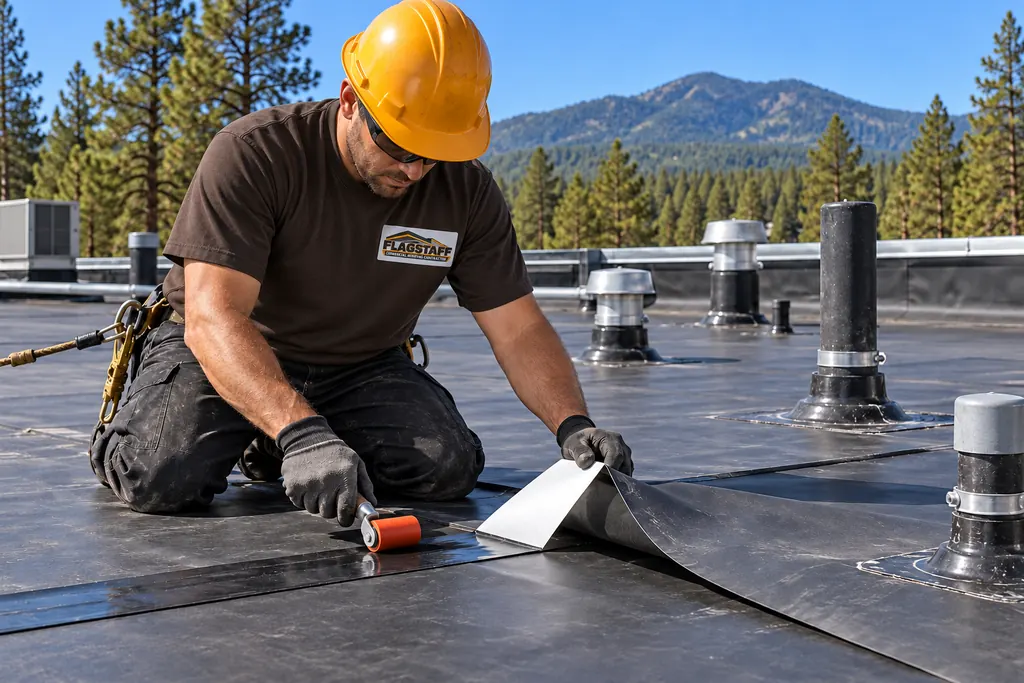
Fresh TPO welds or taped EPDM seams hold against standing meltwater, cutting the after-storm calls during the heavy snow months.
Tenants And Staff
Occupied rooms stay warmer once dry insulation over the deck restores the insulating value the soaked roof had lost.
People inside work under a roof whose deck has been checked for its snow load, with drift zones mapped near each parapet.
Roof Systems
Roof Systems We Install In Mountainaire
Both systems below are single-ply membranes that add little weight. The right one turns on sun exposure, rooftop traffic, and how the roof drains.
Older buildings facing long, deep cold. EPDM stays flexible through freezing nights, black sheets absorb winter sun, and taped seams go down over dry insulation.
Roof Trouble
Thinking About Covering The Old Roof?
Call before you decide. Tell us how many roofs are on the building and where snow drifts.
The choice comes from numbers on the roof plan, worked out in this order.
1
Inspect Your Roof
We count existing layers, cut cores to read the insulation, and mark deck deflection, drift zones, and drain locations on a roof plan.
2
Confirm The Snow Load
Coconino County's snow load study or the ASCE Hazard Tool gives the parcel's ground snow load. Above 70 psf, engineered plans are required, so an engineer checks the deck and framing.
3
Choose Recover Or Tear-Off
Dry insulation, a firm deck, and load to spare point toward a recover. Wet boards, an existing second roof, or a tight load call for removal down to the deck.
4
Install And Close Each Day
Each section gets its new insulation, membrane, and flashings and is sealed before evening. A final walk with you checks every drain, edge, and lap.
What owners ask before covering a Mountainaire roof or taking it down to the deck.
How much snow load does a commercial roof in the Flagstaff area need to handle?
It depends on the parcel, because design snow loads rise with elevation. The local building department sets the criteria, and an engineer confirms them for any structural work.
Coconino County asks designers to pull a parcel-specific ground snow load from its snow load study or the ASCE Hazard Tool, and engineered plans are required above 70 psf. A new layer or heavier system changes the load, which we raise before any recover.
Is a recover cheaper than a full tear-off?
A recover can cost less up front, with less removal and disposal. Cost turns on the snow load margin, how much insulation is wet, and how many roofs are already on the deck.
A recover over wet boards traps moisture and adds weight, so over the roof's life it can cost more than a tear-off done right the first time.
Who handles roof permits for Mountainaire commercial buildings?
The County does. Mountainaire is unincorporated, so Coconino County Building and Safety reviews commercial roof work there.
Expect a pre-construction meeting with County building staff before a commercial application. Rules get updated, so we verify the current ones with the County before roof work.
Why does wet insulation matter for snow load?
Wet insulation adds weight and insulates poorly. Soaked boards left under a recover keep that extra weight on the deck through every winter.
Core samples and moisture scans find the wet areas, which come out before new material goes down. Wet boards also leak heat that feeds ice at the eaves.
What makes a roof project need engineered plans?
In Coconino County, a parcel ground snow load above 70 psf triggers engineered plans. Added layers, heavier systems, or deck damage also bring an engineer in to confirm the framing.
We look up the parcel's number before planning a recover, so engineering is on the schedule from day one.
Should we pick TPO or EPDM for a Mountainaire building?
It turns on how the roof is used. White TPO with heat-welded seams fits roofs in strong summer sun and lasts about 20 to 30 years, with ponding and rooftop traffic shortening that.
EPDM stays flexible in deep cold and lasts about 25 to 30 years, with seam adhesive failure, punctures, and edge uplift as its weak points.
How disruptive is a tear-off for tenants?
Tear-off is the loudest phase, so it is scheduled early in the day or on days the building is closed. Only one section is opened at a time, and each is watertight by evening.
Chutes and cranes stay away from doors and fire lanes, and rooftop air intakes are shielded from dust and fumes. We coordinate dates with your tenants.
Next Step
Start With A Mountainaire Commercial Roofing Contractor
Tell us the roof's age, how many layers it has, and where snow piles up. We will begin with the load.